September 3-7, 2024: After the New moon, the lunar crescent joins the nightly planet parade after sundown. Each night through mid-month, Venus, Saturn, Jupiter, Mars, and Mercury parade westward.

by Jeffrey L. Hunt
Nightly Planet Parade
Each night after sundown and before the next morning’s sunrise, five bright planets parade westward. Venus and Saturn are visible during the early evening. Jupiter and Mars rise around midnight, followed by Mercury near sunrise.
See related articles:
- 2024, August 31: Nightly Planet Parade
- 2024, September 2: See Planets Uranus and Neptune in Nightly Planet Parade
Moon Joins Parade

The moon joins the parade on the 4th after yesterday’s New moon phase, starting lunation 1258, the number of lunar cycles since the count began in 1923. Tonight, the lunar orb sets only 25 minutes after nightfall.
Venus’ View Suffers from Shallow Angles

We have a poor view of the solar system in the western sky after sundown at this season. The plane of the solar system has a low angle with the horizon. Venus’ visibility suffers from this geometry.
Venus’ slow appearance mimics the moon’s change from night to night. The accompanying chart shows the low angle the moon makes with the horizon. By September 7th, the moon is over 10° above the horizon, although it is nearly 60° east of the sun. Nightly, it moves about 13° eastward, but gains only 10° in altitude – height above the horizon – by the end of the period in this planet forecast.
Nightly Highlights: September 4-7
Use a binocular to track the moon’s place at 30 minutes after sunset. Here are the highlights:

- September 4: Find Venus about 5° up in the west. It shines through bright evening twilight. The lunar crescent, 3% illuminated, is near the horizon and 4.3° to the planet’s lower right.

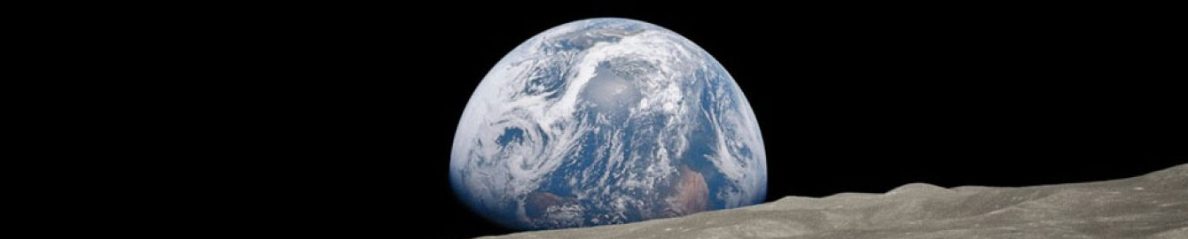
- September 5: This evening the lunar crescent, 8% illuminated, is higher in the west-southwest and 7° to Venus’ left. The crescent is about midway from Venus to Spica, 8.5° to the moon’s upper left, too far away to fit in the same binocular field. Begin looking for earthshine, sunlight reflected from Earth’s features that gently lights the lunar night.

- September 6: The lunar crescent, 13% illuminated, is less than 10° above the horizon, 3.3° to Spica’s left, and less than 20° to Venus’ upper left. The moon occults or eclipses Spica from western Africa. The event occurs during the daytime in eastern Canada and eastern US. From New York City, the occultation begins at 11:31 a.m. Eastern Time. The moon uncovers the star at 12:37 p.m. The moon is visible during the daytime and a telescope is needed to see the event.
- September 7: Over 10° above the southwest horizon, the lunar crescent, 20% illuminated, is over 15° to Spica’s upper left and nearly 30° from Venus.
Use the binocular to watch Venus approach and pass Spica. They fit into the same binocular field on the 12th. Their conjunction occurs five nights later.
RECENT PODCASTS
LATEST ARTICLES
- 2026, April 14: Venus Dominates the Evening Sky with Sirius and Orion
 April 14, 2026: Venus shines brightly after sunset while Sirius twinkles in the southwest. Orion stands between them as the spring sky shifts westward each evening.
 - 2026, April 13: Venus and Jupiter Shine After Sunset While Crescent Moon Appears Before Sunrise
 April 13, 2026: Venus dominates the western sky after sunset while Jupiter shines higher in the sky. Before sunrise, find a waning crescent moon with earthshine in the east-southeast.
 - 2026, April 12-14: Waning Crescent Moon and Earthshine Before Sunrise
 April 12-14, 2026: The waning crescent moon appears low in the southeast before sunrise. Watch it pass Deneb Algedi and photograph earthshine during the final mornings before new moon.
 - 2026, April 11: Spring Evening Sky – Spica, Hydra, Corvus, and Crater After Sunset
 April 11, 2026: Two hours after sunset, find Spica low in the southeast with Hydra passing beneath it. Locate Corvus and Crater riding on the Snake’s back in the spring evening sky.
 - 2026, April 10: Spring Evening Sky – Leo, Cancer, and Hydra the Snake After Sunset
 April 10, 2026: Leo stands high in the southern sky while faint Cancer and the Beehive Cluster appear nearby. Below them, Hydra the Snake stretches eastward toward Spica, marked by the solitary glow of Alphard.