January 1-4, 2025: After sundown, brilliant Venus, Saturn, and the crescent moon on display in the southwest after sunset.

by Jeffrey L. Hunt
Events are described relative to sunset. Find sunset times in local sources.
The crescent moon joins brilliant Venus and Saturn in the western sky after sunset. The moon began the lunation – cycle of phases – on December 30th. Each night, the moon is higher in the southwestern sky and its phase is thicker.

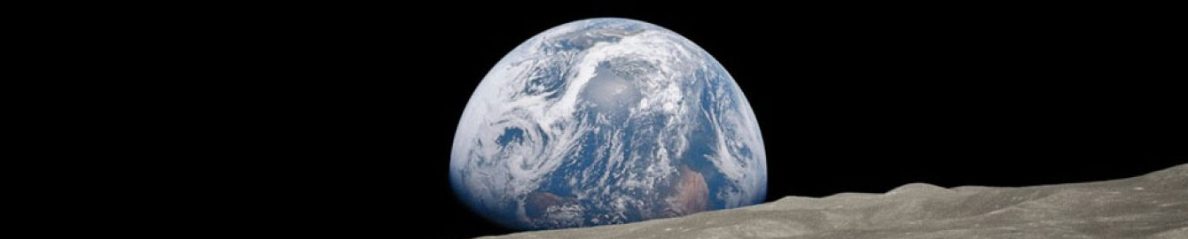
Look for earthshine on its night portion. This effect is sunlight reflected from Earth’s oceans, clouds, and land. It can be captured with a tripod mounted camera and exposures up to a few seconds or a handheld camera if held steadily.
Venus, Saturn, Moon Evening Display

Here’s what to look for one hour after sunset:
January 1: Brilliant Venus is nearly 30° up in the west – one-third of the way from the southwest horizon to overhead. It is 5.0° to Deneb Algedi’s upper left, Capricornus tail, and 15.8° to Saturn’s lower right. The crescent moon, 5% illuminated, is about 5° above the horizon over 20° to Venus’ lower right.
January 2: The crescent moon, 10% illuminated, is over 15° up in the southwest and 9.9° to Venus’ lower right. This is a pretty view of earthshine. The Venus-Saturn gap is 14.9°.

January 3: Get out the camera to photograph a beautiful Venus-Moon conjunction. The crescent moon, 18% illuminated, is 3.6° to Venus’ left. Both fit into a binocular field of view. Through a telescope, Venus’ phase is an evening gibbous 54% illuminated. The Venus-Saturn gap is 14.9°.
January 4: The crescent moon, 28% illuminated, is less than halfway up in the south-southwest. It is 3.3° to Saturn’s upper left and 16.2° to Venus’ upper left. The Venus-Saturn separation is 12.9°. Earlier today, the moon occults Saturn for European sky watchers.
Watch Moon Wax
The moon continues to wax, passing Jupiter on the 10th and occulting Mars for sky watchers in the Americas on the 13th.
Venus steps eastward overtaking Saturn on the 18th. On February 1st, the crescent moon appears 2.5° from brilliant Venus.
As the new year opens, look for the Venus, Saturn, Moon display in the southwest after sunset.
RECENT PODCASTS
LATEST ARTICLES
- 2026, April 13: Venus and Jupiter Shine After Sunset While Crescent Moon Appears Before Sunrise
 April 13, 2026: Venus dominates the western sky after sunset while Jupiter shines higher in the sky. Before sunrise, find a waning crescent moon with earthshine in the east-southeast.
 - 2026, April 12-14: Waning Crescent Moon and Earthshine Before Sunrise
 April 12-14, 2026: The waning crescent moon appears low in the southeast before sunrise. Watch it pass Deneb Algedi and photograph earthshine during the final mornings before new moon.
 - 2026, April 11: Spring Evening Sky – Spica, Hydra, Corvus, and Crater After Sunset
 April 11, 2026: Two hours after sunset, find Spica low in the southeast with Hydra passing beneath it. Locate Corvus and Crater riding on the Snake’s back in the spring evening sky.
 - 2026, April 10: Spring Evening Sky – Leo, Cancer, and Hydra the Snake After Sunset
 April 10, 2026: Leo stands high in the southern sky while faint Cancer and the Beehive Cluster appear nearby. Below them, Hydra the Snake stretches eastward toward Spica, marked by the solitary glow of Alphard.
 - 2026, April 9: Sun, Moon, and Planet Almanac
 April 9, 2026: The Last Quarter moon appears before sunrise in front of Sagittarius while Venus and Jupiter dominate the evening sky. Track daylight changes and planetary visibility.