

April 3, 2021: Before sunrise, the bright gibbous moon is near the top of the lid of the Teapot of Sagittarius. Farther east, Jupiter and Saturn are in front of the stars of Capricornus. In the evening, Mars continues its eastward march in Taurus. It is between Aldebaran and Elnath this evening.
by Jeffrey L. Hunt
Chicago, Illinois: Sunrise, 6:30 a.m. CDT; Sunset, 7:19 p.m. CDT. Check local sources for sunrise and sunset times for your location.
Morning Sky
Step outside this morning during twilight to find the slightly gibbous moon low in the south. The lunar orb is near the Teapot of Sagittarius. The shape is an asterism, a group of stars that look like a familiar object – such as the Big Dipper.
Sagittarius is a centaur, part human and part horse.
The moon is near Kaus Borealis (λ Sgr on the chart), “the northern part of the bow” of the centaur.

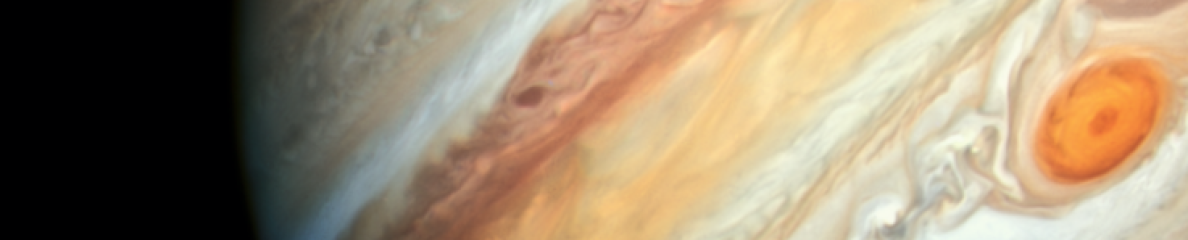
Farther east Jupiter continues to move away from Saturn. Brighter Jupiter is over 8° above the east-southeast horizon at this hour. Saturn is dimmer and 12.1° to the upper right of the Jovian Giant.
To estimate the distance between the two planets. Extend your fist. The angular distance from your thumb knuckle to pinky finger knuckle is about 10°. Move your fist to make it horizontal. Orient it so that one knuckle is near Jupiter. Angle your fist up a little bit. Saturn will be near the other knuckle as you observe your fist against the morning sky.
In the starfield, Jupiter is 1.9° to the upper left of Deneb Algiedi (δ Cap on the chart), while Saturn is 2.5° to the upper right of Theta Capricorni (θ Cap). Use a binocular to spot the stars.
During April watch these slow-moving planets move eastward compared to these two stars.
Evening Sky

One hour after sunset, Mars is over halfway up in the west in front of the stars of Taurus. It is on a line from the constellation’s brightest star, Aldebaran, to Elnath, the Bull’s Northern Horn. It is 6.0° to the lower left of Elnath and 10.7° to the upper right of Aldebaran.
Here’s more about Mars during 2021.
Read about Mars during April.
Detailed Note: One hour before sunrise, the slightly gibbous moon (21.0d, 61%) is over 20° in altitude above the southern horizon. The lunar orb is 5.1° to the right of Kaus Borealis (“the northern part of the bow”, λ Sgr, m = 2.8), the star at the top of the lid of the Teapot of Sagittarius. Farther east, Jupiter is over 8° up in the east-southeast. It is 1.9° to the upper left of δ Cap. Saturn is 12.1° to the upper right of Jupiter and 2.5° to the upper right of Theta Capricorni (θ Cap, m = 4.0). One hour after sunset, Mars is over halfway up in the west among the stars of Taurus. The planet is on a line from Aldebaran (α Tau, m = 0.8) to Elnath. It is 6.0° to the lower left of Elnath and 10.7° to the upper right of Aldebaran.
Read more about the planets during April 2021.
LATEST ARTICLES
- 2026, May 20: Waxing Crescent Moon Near Jupiter as Venus Brightens the Evening Sky
 May 20, 2026: See the waxing crescent moon near Jupiter after sunset while brilliant Venus shines in the west-northwest. Saturn climbs higher before sunrise as Mercury moves into the evening sky.
 - 2026, May 19: Crescent Moon Between Venus and Jupiter After Sunset
 May 19, 2026: See the crescent moon between brilliant Venus and Jupiter after sunset while Saturn climbs higher in the eastern sky before sunrise. Learn where and when to look.
 - 2026, May 18: Closest Venus–Moon Conjunction of the Evening Apparition Lights the Western Sky
 May 18, 2026: See the closest Venus–Moon conjunction of this evening apparition as brilliant Venus shines beside the crescent moon after sunset. Learn when and where to look.
 - 2026, May 17-20: Waxing Crescent Moon Passes Venus and Jupiter in May Evening Sky
 May 17-20, 2026: Watch the waxing crescent moon pass brilliant Venus and Jupiter after sunset. The May 18 Venus–Moon pairing is one of the prettiest sights of the planet’s 2026 evening apparition.
 - 2026, May 16: Three Bright Planets are in the Nighttime Sky as Venus Closes in on Jupiter
 May 16, 2026: Saturn emerges from morning twilight while brilliant Venus advances toward Jupiter after sunset. Learn where to find the bright planets.