August 1, 2023: Jupiter and Saturn are visible before daybreak. The nearly full moon is visible all night. The lunar orb approaches Saturn.

by Jeffrey L. Hunt
Chicago, Illinois: Sunrise, 5:44 a.m. CDT; Sunset, 8:09 p.m. CDT. Check local sources for sunrise and sunset times.
As the month opens, daylight lasts fourteen hours, twenty-four minutes. During August, the length of daylight shrinks seventy-one minutes.
Summaries of Current Sky Events
SUMMARY FOR VENUS AS AN EVENING STAR
Here is today’s planet forecast:
Morning Sky

Jupiter, Saturn, and the moon are visible before sunrise. An hour before daybreak, the bright, nearly-full moon is setting in the southwest. Its light might be streaming through the neighbor’s trees or between local houses and buildings.
Saturn is higher in the sky, about 30° above the horizon, to the moon’s upper left. The planet is retrograding in front of Aquarius, but its stars are difficult to see in this moonlight.

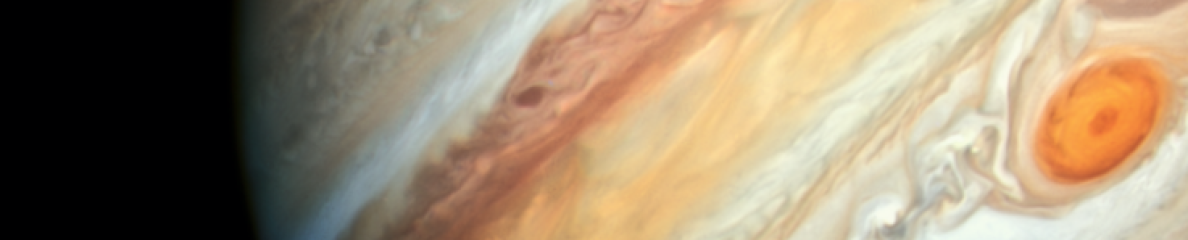
Jupiter shines from the southeast, over halfway up, at this hour. It is moving eastward against Aries, 12.6° to the lower left of Hamal and less than 18° to the upper right of the Pleiades star cluster. Look carefully for the stellar bundle, the moonlight competes with its brightness.
Evening Sky

The moon is officially at its Full (Sturgeon) moon phase at 7:32 p.m. CDT, about an hour before it rises in Chicago.
The three evening planets are immersed in bright twilight after sunset. Brilliant Venus is less than 3° above the western horizon at sunset, setting seventeen minutes later. It is overtaking our planet, passing between Earth and the sun on the 13th, then moving into the morning sky. Today, Venus is about 29 million miles from Earth.
Mercury, dimming each evening, is trekking toward its greatest elongation, the farthest it appears from the sun. At forty-five minutes after sundown, the speedy planet is less than 4° up in the west.
Yesterday, we bade farewell to Mars. The planet is dim and washed out by the bright blush of evening twilight. An hour after sunset, it is about 5° up in the west. In the solar system, the Red Planet is nearly eight times Venus’ distance from Earth.
While the evening planet group is difficult to see from the northern hemisphere, it is easily visible for our southern hemisphere readers. The planets are in the western sky after sundown, although Venus is very close to the horizon.

Step outside about two hours after sundown, as evening twilight ends. The August evening sky offers views of six of the fifteen brightest stars seen from the mid-northern latitudes. The Summer Triangle, with Vega (3rd brightest), Altair (8th), and Deneb (14th), is high in the eastern sky. The shape is quite large, but it is not a formal constellation, just a convenient pattern to imagine.
Vega is nearly overhead. Altair is over halfway up in the southeast. and Deneb is high in the northeast. Deneb is one of the brightest stars in our part of the galaxy. It shines with a brightness of 48,000 suns from 1,400 light years away.
Spica, tenth brightest, is low in the west-southwest, while Arcturus, 2nd brightest, is about halfway up in the west.
The final bright star is Antares, the heart of the Scorpion and the eleventh brightest star for sky watchers at mid-northern latitudes.
At this season the Big Dipper, likely the most famous pattern known in the northern hemisphere, is in the northwest. Two stars in the bowl, known as the Pointer Stars, direct our attention toward Polaris, about halfway up in the north, ranking as the 49th brightest star visible from Earth.
Saturn rises in the east-southeast about seventy minutes after nightfall and thirty-five minutes after moon rise. About two hours later, the lunar orb is about 20° up in the southeast with the Ringed Wonder over 20° to the left.
During the night, Saturn and the moon appear farther westward.
RECENT PODCASTS
LATEST ARTICLES
- 2026, May 25-27: Waxing Gibbous Moon Passes Spica While Venus Closes Gap to Jupiter
 May 25-27, 2026: Watch the waxing gibbous moon pass Spica in Virgo while Venus steadily overtakes Jupiter in the western evening sky before their June 9 conjunction.
 - 2026, May 23-29: Venus Overtakes Jupiter During May Evening Sky Display
 May 23-29, 2026: Watch Venus rapidly close the gap to Jupiter with Gemini during late May evenings. Follow the bright planets past Pollux, Alhena, Mebsuta, and other notable Gemini stars.
 - 2026, May 22-24: Waxing Moon Passes Leo While Venus and Jupiter Shine After Sunset
 May 22-24, 2026: Watch the waxing moon move through Leo after sunset while brilliant Venus and Jupiter shine in the western sky. Learn how to find Regulus, Denebola, and the Sickle of Leo.
 - 2026, May 21: Crescent Moon Near the Beehive Cluster with Venus and Jupiter After Sunset
 May 21, 2026: See the crescent moon near the Beehive Cluster after sunset while brilliant Venus and Jupiter shine in the western sky. Saturn appears before sunrise in the east.
 - 2026, May 20: Waxing Crescent Moon Near Jupiter as Venus Brightens the Evening Sky
 May 20, 2026: See the waxing crescent moon near Jupiter after sunset while brilliant Venus shines in the west-northwest. Saturn climbs higher before sunrise as Mercury moves into the evening sky.