April 23, 2025: The morning crescent moon approaches Venus in the eastern sky before sunrise. Jupiter and Mars are visible after sunset.

by Jeffrey L. Hunt
Chicago, Illinois: Sunrise, 5:58 a.m. CDT; Sunset, 7:41 p.m. CDT. Check local sources for sunrise and sunset times. Times are calculated by the US Naval Observatory’s MICA computer program.
Related Articles
Venus Summary Article
VENUS AS A MORNING STAR, 2025
Morning Moon Approaches Venus

Before sunrise, the crescent moon approaches brilliant Venus. At 45 minutes before sunrise, look toward the eastern sky. The Morning Star is about 10° up in the east. The crescent moon, 25% illuminated, is 24° to Venus’ upper right.

Look for earthshine on the moon’s night side – sunlight reflected from Earth gently illuminates the lunar landscape. Capture the effect with a tripod-mounted camera or a steady hand-held phone using exposures of up to a few seconds.
Saturn is 4.4° to Venus’ lower right. It is dimmer than average and only 5° above the horizon. Likely not visible to the unaided eye, the Ring Wonder fits into the same binocular field with Venus.
In two mornings, Venus, Saturn, and the crescent moon fit into the same binocular field in a pretty predawn display.
Jupiter after Sunset

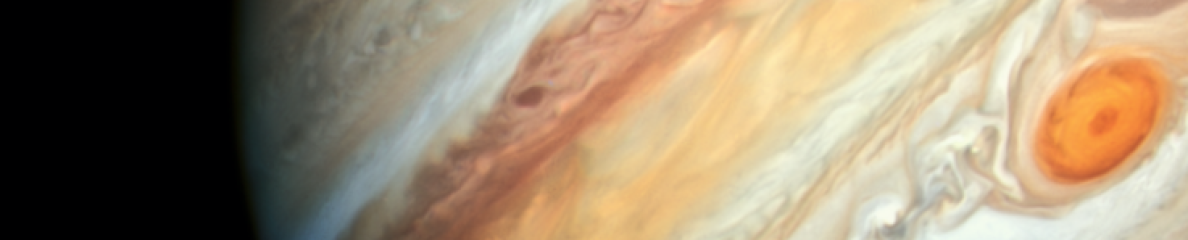
After sundown, bright Jupiter is less than 30° above the western horizon. It rambles eastward in front of Taurus, 6.3° to Elnath’s lower left, the Bull’s northern horn, and 5.5° to Zeta Tauri’s lower right, the southern point.
Look for Orion, to Aldebaran’s left, Taurus’ brightest star. The star Rigel, Orion’s knee, is less than 10° above the horizon. It slowly disappears into bright evening twilight in about a week. We will see it again in the eastern sky before sunrise near mid-July.
Mars with Cancer

Mars, high in the southwest, marches eastward in front of Cancer. It is 10.0° to Pollux’s lower left.
The Red Planet dims as the distance to Earth widens. Tonight, Mars is over 125 million miles from our home planet. The planet is dimmer than Procyon, nearly 20° below it, but brighter than Castor and Pollux, the Gemini Twins.
Mars and the Beehive through a Binocular

Through a binocular, Mars is 5.3° west (to the right) of the Beehive star cluster. Sometimes named the Praesepe, meaning manger, the stellar bundle is easily visible as a large fuzzy spot from the countryside.
In his book, Deep Sky Wonders, Walter Scott Houston describes the view: “I have always considered the . . . Praesepe to be symbolic of spring. The ancients knew it as a dimly glowing cloud. If the sky were veiled with the slightest trace of cirrus clouds at the leading edge of a storm, the star cluster could not be seen with the naked eye (p. 85).”
During the next few weeks, watch the planet approach and pass the star cluster after sundown. During the morning, look for brilliant Venus and the crescent moon.
RECENT PODCASTS
LATEST ARTICLES
- 2026, June 9: Venus-Jupiter Conjunction Occurs in the West-Northwest with Mercury Nearby
 June 9, 2026: See Venus and Jupiter in a close evening conjunction after sunset with Mercury lower in the west-northwest sky. Includes observing tips and future conjunction dates.
 - 2026, June 8: Venus Threads Between Jupiter and Pollux Before Brilliant Evening Conjunction
 June 8, 2026: See Venus and Jupiter only 2 degrees apart after sunset with Mercury nearby in Gemini. Find the bright planets and moon before sunrise with Saturn and Mars.
 - 2026, June 7: Venus Closes in on Jupiter Before June 9 Conjunction
 June 7, 2026: Venus moves within 2.3° of Jupiter after sunset while Mercury joins the evening sky lineup low in the west-northwest before the June 9 conjunction.
 - 2026, June 6: Venus Nears Jupiter Before Their Evening Conjunction
 June 6, 2026: Venus closes to within 3.1° of Jupiter after sunset while Mercury joins the evening planet lineup low in the west-northwest sky.
 - 2026, June 5: Venus and Jupiter Tighten in the Western Sky After Sunset
 June 5, 2026: Venus closes to within 4° of Jupiter after sunset while Mercury joins the evening planet lineup low in the west-northwest sky.