November 2, 2025: Daylight Saving Time ends as Venus passes Spica before sunrise. Jupiter shines high in front of Gemini while the moon approaches Saturn this evening.

by Jeffrey L. Hunt
Chicago, Illinois: Sunrise, 6:25 a.m. CST; Sunset, 4:43 p.m. CST. Times are calculated by the US Naval Observatory’s MICA computer program. Check local sources for sunrise and sunset times.
Related Articles
Venus Summary Article
Daylight Time Ends
Daylight Saving Time ends across North America this morning, where clocks were advanced in March. At 2:00 a.m. local Daylight Time, clocks return to 1:00 a.m. local Standard Time. Daylight does not lose an hour; rather, the clocks more closely match the sun’s position. From yesterday today, daylight lost three minutes from the sun’s seasonal shift southward.
A few days ago, the length of darkness exceeded daytime. Darkness is the part of night when the sky is naturally without any sunlight. Occurring before sunrise and after sunset, twilight is the other fraction of nighttime. Daytime, darkness and twilight add to 24 hours.
Year-round daylight time is again under consideration in the nation’s capital. We have reviewed the issues of advancing the clock an hour ahead of standard time. The link to one article is here, with links to other articles going back five years. Two important points: Quite simply, there’s no daylight to save at around 38° and northward. Secondly, the US tried this during 1974 and the citizens rejected year-round daylight time.
Venus-Spica Conjunction

Before sunrise, A Venus-Spica conjunction occurs in the east-southeast. The Morning Star steps eastward each morning, passing 3.5° to Spica’s upper left, a wide conjunction. At 45 minutes before sunup, the Morning Star is over 5° up in the east. While Spica has not made its first morning appearance (heliacal rising) to the unassisted eye, it is visible in the same binocular field with Venus.
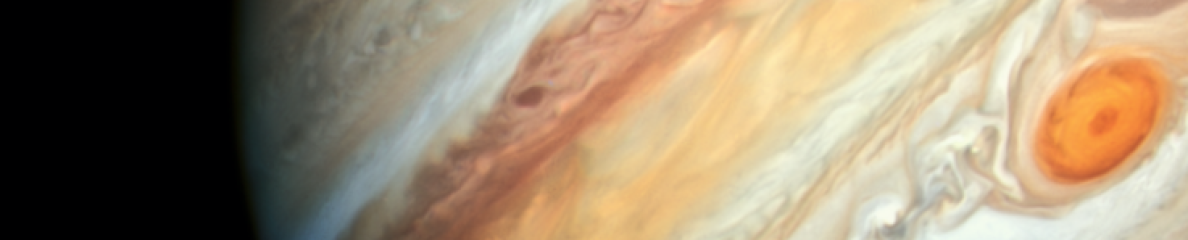
Rising before midnight and climbing higher into the sky during the night, bright Jupiter is high in the south-southwest. It rambles eastward in front of Gemini near Pollux. It is slowing as the illusion of retrograde begins in several days.
Jupiter

When looking for Venus and Spica, find Jupiter high in the south-southwest, 6.7° to Pollux’s lower left, one of the Twins.
Notice the gap between Venus and Jupiter. Venus passed Jupiter in a pretty conjunction on August 12th. In the 94 days, Venus opened a gap between them to 89°, nearly 1° each morning.
Evening Moon, Saturn

After sundown, the moon is near Saturn. Heading toward the Full (Beaver) Moon, the second full phase of the season on the 5th, the lunar orb is near 30° or one-third of the way from the horizon to overhead in the southeastern sky.
Saturn, noticeably dimmer than Venus and Jupiter, is 10° to the right of the moon. The planet is not as bright as average as we see the rings from the edge, nearly as a line passing through Saturn. The icy, highly-reflective rings disperse light away from Earth reducing Saturn’s brightness in the sky.
Neptune is in the same binocular field of view as Saturn, but moonlight overwhelms viewing the planet. Similarly, Uranus rises in a few hours and the Tilted World is more difficult to locate in with the bright gibbous moon in the sky. Both planets are easier to see when the moon is not present. Look for it when the moon is at the crescent phase.
LATEST ARTICLES
- 2026, June 13: Five Bright Planets and the Crescent Moon Span the Nighttime Sky
 June 13, 2026: See all five bright planets during nighttime hours. Venus, Jupiter, and Mercury shine after sunset, while Saturn, Mars, and a thin crescent moon appear before sunrise.
 - 2026, June 12: Venus Pulls Away from Jupiter as Mercury Approaches Greatest Elongation
 June 12, 2026: Venus widens its gap from Jupiter after conjunction while Mercury approaches greatest elongation. Before sunrise, the crescent moon appears above Mars with Saturn nearby.
 - 2026, June 11: Morning Moon Between Saturn and Mars While Venus and Jupiter Shine After Sunset
 June 11, 2026: A waning crescent moon showing earthshine appears between Saturn and Mars before sunrise, while Venus, Jupiter, and Mercury line up in the western sky after sunset.
 - 2026, June 10: Venus and Jupiter Remain Close After Conjunction with Mercury Below
 June 10, 2026: After their conjunction, Venus and Jupiter remain near each other in the west-northwest after sunset while fading Mercury appears lower in evening twilight.
 - 2026, June 9-13: Waning Crescent Moon Passes Saturn and Mars Before Sunrise
 June 9-13, 2026: See the waning crescent moon with Saturn and Mars before sunrise during mid-June. Learn where to look for earthshine, Saturn’s rings, Mars, and the Pleiades in the eastern sky.