January 25, 2026: Jupiter dominates the eastern sky after sunset as winter’s brightest stars rise through moonlight, including Sirius, Procyon, and Orion.

by Jeffrey L. Hunt
Chicago, Illinois: Sunrise, 7:09 a.m. CST; Sunset, 4:57 p.m. CST. Times are calculated by the US Naval Observatory’s MICA computer program. Check local sources for sunrise and sunset times.

Jupiter and winter’s brightest stars are visible in the eastern sky at the end of evening twilight. With the moon nearing its First Quarter phase tonight at 10:47 p.m. CST, moonlight spreads across the sky, blotting out the dimmer stars. With only the brightest stars peering through moonlight’s veil, look eastward.
Before identifying individual stars, note one effect that often surprises beginning skywatchers: bright stars near the horizon often twinkle strongly, while planets do not. The reason becomes clear as the scene unfolds.
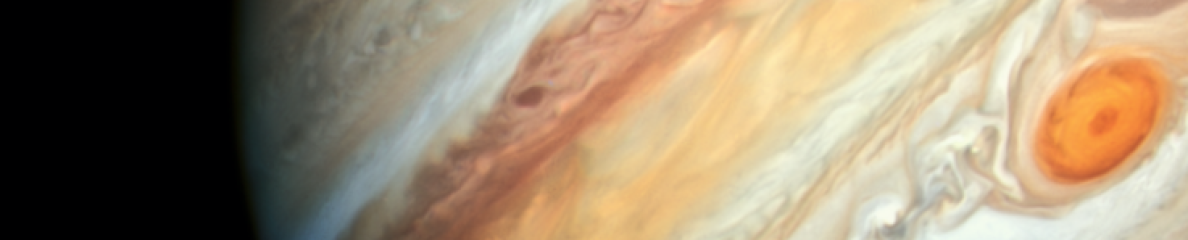
Bright Jupiter dominates the night. It is noticeably brighter than Sirius. To our eyes, Jupiter appears as a bright star, yet its identity is quickly confirmed through optics. Its cloud features and four largest moons are easily resolved through a backyard telescope, while the stars still appear as points of light when sharply focused.
At this hour, the Jovian giant is over 30° above the eastern horizon. It retrogrades in front of Gemini’s starfield, 8.4° to Pollux’s upper right and 10.1° to Castor’s lower right, the Twins.

Meanwhile, Sirius, the Dog Star, is about 10° up in the southeast and nearly 40° to Jupiter’s lower right. The star is likely twinkling wildly, displaying rapidly changing colors. This effect occurs when turbulent air near the horizon breaks starlight into its component colors, from blue to red, which alternate into view. In comparison, the sun, moon, and five bright planets do not twinkle. The effect diminishes as stars climb higher in the sky.
Procyon, the Little Dog Star, is about halfway from Jupiter to Sirius, but below an imaginary line between them. Its name means “before the dog.” From mid-northern latitudes, Procyon rises about 20 minutes before Sirius.
World-famous Orion is above Sirius, less than halfway from the horizon to overhead in the southeast. The Hunter’s three belt stars of nearly equal brightness lie near the middle of the constellation. Reddish Betelgeuse marks the shoulder to the upper left, while blue-white Rigel shines to the lower right.
Each night, Jupiter and these stars appear farther eastward at the end of twilight. By mid-February, Orion stands nearly south at this same interval after sunset. By mid-March, Sirius is above the southern horizon, while Orion tips toward the western horizon.
Tonight, look for bright winter stars in the eastern sky, and watch them appear farther westward at the end of twilight as the season unfolds.
LATEST ARTICLES
- 2026, June 4: Venus Closes to Within 5° of Jupiter After Sunset
 June 4, 2026: Venus rapidly closes the gap to Jupiter before their June 9 conjunction while Mercury joins the bright evening planet display low in the western sky.
 - 2026, June 3: Venus Closes in on Jupiter as Mercury Appears in Evening Planet Display
 June 3, 2026: Venus and Jupiter tighten toward their June 9 conjunction while Mercury joins the bright evening planet lineup low in the western sky after sunset.
 - 2026, June 2: Venus-Jupiter Conjunction in a Week
 June 2, 2026: Venus rapidly overtakes Jupiter before their June 9 conjunction while Mercury joins the bright evening planet lineup low in the western sky after sunset.
 - 2026, June 1: Venus Overtakes Jupiter in Bright Evening Conjunction Display
 June 1, 2026: Venus rapidly closes the gap to Jupiter in the western sky after sunset while Mercury joins the bright evening planet lineup in Gemini.
 - 2026, May 31: Venus, Jupiter, and Mercury Form Bright Evening Planet Lineup
 May 31, 2026: Venus, Jupiter, and Mercury line up in the western sky after sunset while Venus rapidly closes the gap to Jupiter before their June 9 conjunction.