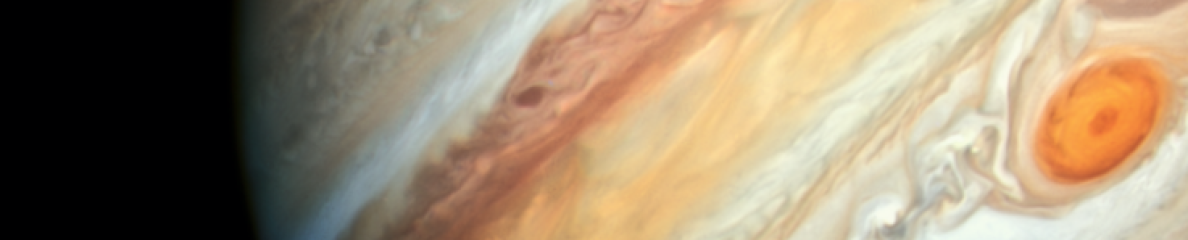

July 13, 2021: During the nighttime hours, five bright planets are visible. Jupiter and Saturn are visible from late in the evening until sunrise. Mercury is visible before sunrise, while Venus, Mars, and Venus are in the evening sky.

by Jeffrey L. Hunt
Chicago, Illinois: Sunrise, 5:28 a.m. CDT; Sunset, 8:25 p.m. CDT. Check local sources for sunrise and sunset times for your location.
The five bright planets are visible during the nighttime hours during mid-July.
Tour the planets starting before sunrise. Bright Jupiter and Saturn are in the south-southwest about an hour before sunrise.
Jupiter is the brightest “star” in the morning sky. Look for it over one-third of the way up in the south-southwest. Hold a binocular steady to see up to four of the planet’s largest satellites. A spotting scope or small telescope clearly shows the planet’s globe.
The Jovian Giant is retrograding in Aquarius. During this illusion, our planet is catching up to and passing between Jupiter and the sun. Compared to the distant stars, the planets seem to back up or move westward compared to the starry background. Earth passes between the sun and Jupiter on August 19.
Saturn is retrograding, as well, in front of the stars of Capricornus. It is at opposition on August 2.
Saturn is 19.7° to the lower right of Jupiter. It is brighter than most of the stars this morning except for Jupiter, Mercury, Arcturus, and Vega.
The star Fomalhaut is to the lower left of Jupiter.

Mercury is putting on a performance in the east-northeast about 45 minutes before sunrise. The speedy planet is making its 2021 summer morning appearance. The planet is low in the east-northeast during morning twilight. Find a clear horizon in that direction. It nearly always shows itself during twilight and rarely is visible in a dark sky from mid-northern latitudes.
Mercury continues to brighten, but it is lower each morning until it disappears into bright morning twilight in about a week.

Venus and Mars, along with the crescent moon, are in the western sky after sunset. Last night Venus was closest to Mars, a conjunction. They are still close this evening. Venus is 0.5° above the Red Planet.
Mars is not as bright as it was earlier in the year. Use a binocular to spot it below Venus.
Saturn is entering the evening sky. It rises over an hour after sunset, while Venus sets 104 minutes after sunset. If you have clear horizons in the east-southeast look for Saturn about 80 minutes after sunset, low in the sky. Venus and Mars are low in the west-northwest at this time.
As the night unfolds, Venus and Mars set in the west. Saturn appears higher in the sky and Jupiter follows.

As the calendar day ends, Jupiter is over 14° above the east-southeast horizon. Saturn is to the upper right of the Jovian Giant.
There’s the buffet of bright planets. During the night, Jupiter and Saturn appear farther southward and the sequence begins again.
Mercury is part of this celestial counter of delightful sights for about another week.
Detailed Daily Note: July 13: One hour before sunrise, Saturn is nearly 24° up in the west-southwest. Retrograding in Capricornus, the Ringed Wonder is 2.5° to the lower right of θ Cap. Bright Jupiter is 19.7° to Saturn’s upper left. Also retrograding, the Jovian Giant – in Aquarius – is 2.5° to the upper left of ι Aqr, 4.3° below θ Aqr, and 4.3° to the lower right of σ Aqr. Use a binocular to observe that Jupiter is to the upper left of a diagonal line from 38 Aquarii (38 Aqr, m = 5.4) to 42 Aquarii (42 Aqr, m = 5.3). The gap between the stars is 1.9°. During the next few mornings watch the Jovian Giant move between the two stars. Fifteen minutes later, Mercury (m = −0.5) is over 5° up in the east-northeast and over 22° to the lower left of Aldebaran. One hour after sunset, brilliant Venus is nearly 6° up in the west-northwest, 0.5° above Mars and 9.7° to the lower right of Regulus. Higher in the western sky, the moon (4.0d, 16%) is about 12° up in the west, 10.0° to the upper left of Regulus. Saturn rises 63 minutes after sunset. The Ringed Wonder, Venus, and Mars are in the sky at the same time if you have favorable views of the horizons where the three planets appear. Jupiter rises 117 minutes after sunset, but 13 minutes after Venus sets. The Venus – Jupiter opposition occurs in a week. This signals that both planets soon appear in the sky at the same time. Venus, Jupiter, and Saturn are in the sky together until Venus moves toward inferior conjunction early next year. Since Venus is moving away from Mars, the Jupiter – Mars opposition occurs later this month, four planet – planet oppositions during a short span. The moon sets less than three hours after sunset. As midnight approaches, Saturn is over 20° above the southeast horizon, while Jupiter is over 14° up in the east-southeast.
Articles and Summaries
- Venus as an Evening Star
- Venus Evening Star (Summary)
- Mars during 2021 (Summary)
- July Planet Summary 2021 (Summary)
LATEST ARTICLES
- 2026, June 5: Venus and Jupiter Tighten in the Western Sky After Sunset
 June 5, 2026: Venus closes to within 4° of Jupiter after sunset while Mercury joins the evening planet lineup low in the west-northwest sky.
 - 2026, June 4: Venus Closes to Within 5° of Jupiter After Sunset
 June 4, 2026: Venus rapidly closes the gap to Jupiter before their June 9 conjunction while Mercury joins the bright evening planet display low in the western sky.
 - 2026, June 3: Venus Closes in on Jupiter as Mercury Appears in Evening Planet Display
 June 3, 2026: Venus and Jupiter tighten toward their June 9 conjunction while Mercury joins the bright evening planet lineup low in the western sky after sunset.
 - 2026, June 2: Venus-Jupiter Conjunction in a Week
 June 2, 2026: Venus rapidly overtakes Jupiter before their June 9 conjunction while Mercury joins the bright evening planet lineup low in the western sky after sunset.
 - 2026, June 1: Venus Overtakes Jupiter in Bright Evening Conjunction Display
 June 1, 2026: Venus rapidly closes the gap to Jupiter in the western sky after sunset while Mercury joins the bright evening planet lineup in Gemini.