January 13, 2024: Locate Venus and Mercury in a celestial footrace before sunrise. After sundown, the moon is near Capricornus’ tail.

by Jeffrey L. Hunt
Chicago, Illinois: Sunrise, 7:17 a.m. CST; Sunset, 4:42 p.m. CST. Check local sources for sunrise and sunset times. Times are calculated by the US Naval Observatory’s MICA computer program.
Summaries of Current Sky Events
Summary for Venus as a Morning Star, 2023-24
Here is today’s planet forecast:
Morning Sky
Morning Celestial Footrace in Southeast

Two bright planets shine from the southeast before daybreak. Venus appears to be overtaking Mercury. This morning the gap between the two planets is 11.4°. To find this celestial footrace locate brilliant Venus about 15° up in the southeast at forty-five minutes before daybreak.
The Morning Star is stepping eastward in front of Ophiuchus, 9.9° to the left of Antares, the brightest star in Scorpius.
Bright Mercury is to the lower left of Venus and nearly 8° above the southeast horizon. Two days ago, the speedy planet reached greatest elongation, the farthest it appears from the sun. The planet is always low in the sky during morning or evening twilight.
As Mercury rounds its orbit and begins to plunge back into morning twilight, it seems to slow its quick motion against the starry background. This gives Venus an opportunity to overtake the solar system’s innermost world.
Beginning in three mornings and lasting through the 19th, the two planets are moving eastward at about the same pace, maintaining a separation of 11.1° before Mercury speeds away. Watch this celestial footrace each clear morning.
Mars continues it slow climb into morning twilight. It rises nearly an hour before the sun. Mercury passes by on the 27th.
Evening Sky
Evening Crescent Moon

After sundown, a lovely crescent moon, 8% illuminated, is over 15° up in the southwest. The star Deneb Algedi, representing Capricornus’ tail, is 3.4° to the lower right of the lunar crescent.

The moon is displaying earthshine, reflected sunlight from Earth’s features that illuminates the lunar night between the moon’s horns or cusps. The effect is beautiful through a binocular and the optical assist helps to see the nearby star.
Giant Planets
Saturn is 8.2° to the upper left of the moon this evening and the star Fomalhaut is over 18° to the moon’s lower left.

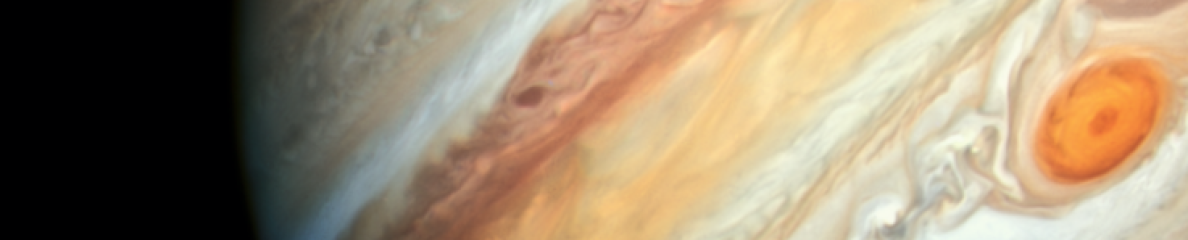
Jupiter is farther eastward, high in the south-southeast. The planet is moving eastward in front of Aries, 11.3° to the lower right of Hamal, the pattern’s brightest star, and 14.4° to the upper right of Menkar, part of Cetus.
During the next several weeks, watch the planet approach an imaginary line between the two stars.
Nighttime Setting
Saturn sets earlier each evening. Tonight, it sets less than four hours after sundown and about an hour after the crescent moon. Jupiter follows the moon and Saturn westward, appearing south at about the time of moonset. It sets about 90 minutes after local midnight.
RECENT PODCASTS
LATEST ARTICLES
- 2026, June 17: Daytime Venus Occultation and Evening Crescent Moon with Three Planets
 June 17, 2026: Watch the crescent moon occult Venus during daylight across North America, then see the moon, Venus, Jupiter, Mercury, and the Beehive Cluster after sunset.
 - 2026, June 16-17: Moon Passes Venus, Jupiter, and Mercury During June Evening Sky Display
 June 16-17, 2026: See the crescent moon join Venus, Jupiter, and Mercury after sunset on. Earthshine, the Beehive Cluster, and Mercury’s fading appearance add to the evening sky show.
 - 2026, June 15: Capella Shines in Morning and Evening Twilight While Mercury Reaches Greatest Elongation
 June 15, 2026: Capella is visible before sunrise and after sunset while Mercury reaches greatest elongation near Jupiter. See Saturn, Mars, Venus, and Jupiter in today’s sky.
 - 2026, June 14: New Moon Begins New Lunar Cycle While Venus, Jupiter, and Mercury Shine After Sunset
 June 14, 2026: The moon reaches New phase and begins lunation 1280. See Venus, Jupiter, and Mercury after sunset, while Saturn and Mars improve in the eastern sky before sunrise.
 - 2026, June 13: Five Bright Planets and the Crescent Moon Span the Nighttime Sky
 June 13, 2026: See all five bright planets during nighttime hours. Venus, Jupiter, and Mercury shine after sunset, while Saturn, Mars, and a thin crescent moon appear before sunrise.