February 8, 2024: During bright morning twilight look for Venus and Mars through a binocular. Jupiter is visible high in the southwest after sunset.

by Jeffrey L. Hunt
Chicago, Illinois: Sunrise, 6:56 a.m. CST; Sunset, 5:14 p.m. CST. Check local sources for sunrise and sunset times. Times are calculated by the US Naval Observatory’s MICA computer program.
Summaries of Current Sky Events
Summary for Venus as a Morning Star, 2023-24
Here is today’s planet forecast:
Morning Sky
Look for Venus and Mars through a Binocular

Venus is the lone bright planet in the sky this morning. It is low in the southeast before sunrise. At forty-five minutes before daybreak, the Morning Star is less than 10° above the horizon. The planet is slowly moving toward superior conjunction on June 4th.
Venus steps eastward against Sagittarius. During the next two weeks, Venus overtakes Mars. It moves eastward at about twice Mars’ rate. Earth’s Twin planet overtakes the Red Planet in a close conjunction on the 22nd.

At thirty minutes before daybreak, Venus and Mars fit into the same binocular field of view. Find Venus earlier when the sky is darker. Reference its location relative to a terrestrial feature, such as a roofline, tree, or other object. Return when Mars is higher, but the sky is brighter. Locate Venus again relative to the landmark and place it off center toward the upper right part of the field of view. Mars is to the lower left.
Mercury
After an appearance last month in the southeastern morning sky, Mercury, rising about thirty minutes before sunrise, is bathed in bright sunlight. It reaches superior conjunction on the 28th.
Evening Sky
Saturn

Saturn is quickly leaving the evening sky. Setting four minutes earlier compared to sunset each evening, the planet is less than 7° above the west-southwest horizon at forty-five minutes after sundown.
Jupiter

In contrast, bright Jupiter is high in the southwest, 11.0° to the lower left of Hamal and 13.2° to the upper right of Menkar. From night to night, the planet is noticeably eastward from the previous night. It approaches an imaginary line between the two stars.

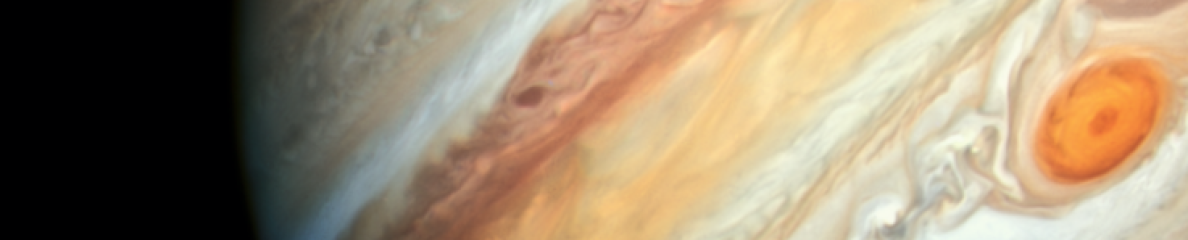
Jupiter’s Great Red Spot is at the center of the planet in the southern hemisphere at 11:33 p.m. CST when the planet is near the horizon from Chicago. For sky watchers farther westward in the Americas, the planet is higher and in clearer air at this time.
Jupiter sets in the west-northwest after midnight.
RECENT PODCASTS
LATEST ARTICLES
- 2026, May 16: Three Bright Planets are in the Nighttime Sky as Venus Closes in on Jupiter
 May 16, 2026: Saturn emerges from morning twilight while brilliant Venus advances toward Jupiter after sunset. Learn where to find the bright planets.
 - 2026, May 15: Venus Closes the Gap to Jupiter While Saturn Emerges Before Sunrise
 May 15, 2026: Saturn emerges from bright morning twilight near a thin crescent moon, while Venus moves eastward between Taurus’ horns and closes in on Jupiter after sunset.
 - 2026, May 14: Venus Closes in on Jupiter While a Crescent Moon Guides Saturn Before Sunrise
 May 14, 2026: A waning crescent moon points to Saturn before sunrise, while Venus moves past Taurus’ horns and closes the gap to Jupiter in the evening sky.
 - 2026, May 13: Crescent Moon Meets Saturn Before Sunrise While Venus Passes Taurus’ Horns Toward Jupiter
 May 13, 2026: A thin crescent moon guides Saturn’s first morning appearance, while Venus passes between Taurus’ horns and closes in on Jupiter in the evening sky.
 - 2026, May 12: Saturn Returns before Sunrise, Crescent Moon Guides the Ringed Planet While Venus Targets Jupiter
 May 12, 2026: Saturn makes its first morning appearance as a crescent moon guides the way before sunrise, while Venus moves between Taurus’ horns toward Jupiter after sunset.