February 28, 2024: A morning moon-Spica and two planet conjunctions with the sun occur today. Mercury is at superior conjunction and Saturn is at solar conjunction.
by Jeffrey L. Hunt
Chicago, Illinois: Sunrise, 6:28 a.m. CST; Sunset, 5:39 p.m. CST. Check local sources for sunrise and sunset times. Times are calculated by the US Naval Observatory’s MICA computer program.
Planet Conjunctions Galore!

Mercury and Saturn are in conjunction with the sun today. Both appear near the central star and are not visible. Mercury’s conjunction occurs at 2:43 a.m. CST, while Saturn’s takes place at 3:25 p.m.
This may lead to a question about when all the planets could be lined up on the same side of the sun. The answer is not easy, because all the planets move at vastly different speeds around the sun. In his book, Mathematical Astronomy Morsels, Jean Meeus addresses the question. He includes Pluto, the classic ninth planet in the calculation. He calculates that once every 300,000,000,000,000,000 years this could occur, essentially longer than the age of the solar system. Essentially, never! In today’s case, Earth, Sun, Mercury, and Saturn are not aligned at the same moment, and our planet is not on the same side of the sun with the pair of interest.
Saturn revolves around the sun nearly every thirty years. With Earth’s faster revolution the planet somewhat mimics the stars’ annual westward march. As Earth moves along its orbital path, the stars rise and set four minutes earlier each night. Saturn makes its first appearance in the eastern sky before sunrise after it passes behind the sun.
Saturn really does not move behind the sun. Rather this is from Earth racing away from the Ringed Wonder so that it disappears into western twilight, then reappears into morning eastern twilight. It looks like the sun overtakes the stars and distant planets, but this is from our movement.
Today, the sun is between Saturn and Earth, known as conjunction.
Inferior, Superior Conjunctions
Conjunctions with the sun for Mercury and Venus occur when the planet is between Earth and Sun, inferior conjunction, or when Sun is between the planet and Earth, superior conjunction. When at inferior conjunction, Mercury and Venus are moving toward morning appearances. After superior conjunction, they move into the western evening sky.
Mercury and Venus move around the sun faster than Earth. The innermost planet revolves around the sun every 88 days and over takes our world with a frequency of 116 days. It appears to quickly shuttle from the western evening sky to an eastern predawn display. Then it returns to the evening sky again. Every year, it makes three to four appearances in each the evening and morning.
Venus is slower, revolving around the sun in 225 days, overtaking Earth every 584 days. It makes longer swings in the morning sky, west of the sun, or evening sky, east of the central star, lasting a large portion of an Earth year.
Mercury is headed toward its best evening appearance of the year in about a month.
Venus reaches superior conjunction during early June and moves into the evening sky for the balance of the year and into 2025.
Summaries of Current Sky Events
Summary for Venus as a Morning Star, 2023-24
Here is today’s planet forecast:
Morning Sky
Morning Moon-Spica Conjunction

One hour before sunrise, the gibbous moon, 86% illuminated, is nearly 25° above the southwest horizon. It is 2.2° to the right of Spica, Virgo’s brightest star. For the next two lunations, the moon’s phase is larger until the April conjunction with the moon nearly Full. A Full moon near Spica is a sure celestial signal that spring has arrived.

Farther eastward, Venus is east of Mars, after their conjunction nearly a week ago.

Through a binocular, find the Morning Star 2.9° to the lower left of the Red Planet at thirty minutes before daybreak.
Evening Sky
Jupiter between Hamal, Menkar

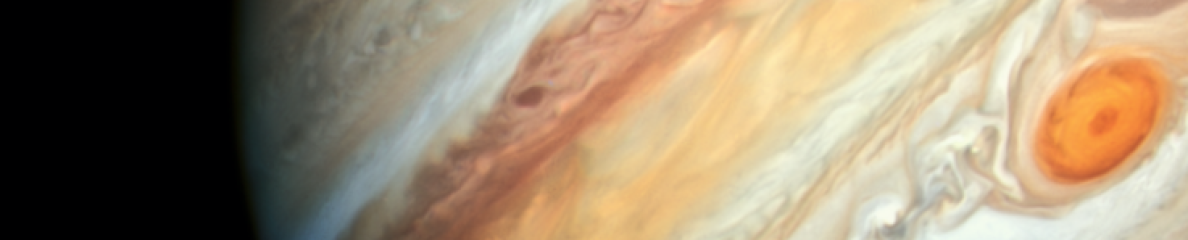
An hour after sunset, bright Jupiter is about halfway up in the west-southwest. The planet moves eastward in front of Aries, 11.3° to the lower left of Hamal and 12.2° to the upper right of Menkar. This evening, the Jovian Giant passes between the two stars.
Midnight Moon

The moon rises later each evening, this evening over four hours after the sun. As the midnight hour approaches, the gibbous moon, 81% illuminated, is nearly 20° up in the southeast and 7.9° to the lower left of Spica.