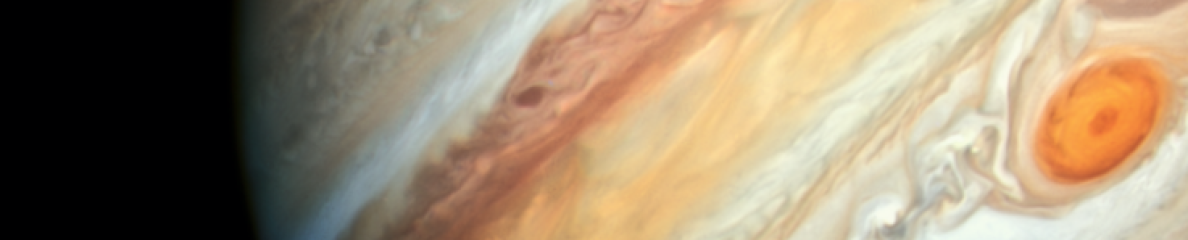
March 16, 2024: After sundown, look for the Late Winter Taurus Moon high in the western sky. Find bright Jupiter and Uranus through a binocular.

by Jeffrey L. Hunt
Chicago, Illinois: Sunrise, 7:00 a.m. CDT; Sunset, 6:57 p.m. CDT. Check local sources for sunrise and sunset times. Times are calculated by the US Naval Observatory’s MICA computer program.
Tomorrow daylight exceeds nighttime. Today, daylight’s length is 11 hours, 59 minutes. Traditionally, the equinox is associated with the day of equal daylight and nighttime. On the occurrence of the equinox in three days, daylight’s length is already 12 hours, 7 minutes long.
Summaries of Current Sky Events
Summary for Venus as a Morning Star, 2023-24
Here is today’s planet forecast:
Morning Sky
Morning Planets
The sky has no bright planet that is easy to see, although three planets are in morning twilight. Mars rises first, 67 minutes before the sun. The planet is dim, but visible with a binocular, in a clear, uncluttered sky over 4° above the east-southeast horizon at 40 minutes before sunrise.
Venus rises 26 minutes later. While bright, the planet is immersed in brightening twilight. Just 20 minutes before daybreak, it is 3° above the horizon, and over 10° to the lower left of Mars, although the Red Planet is washed out by the bright light.
Spotting Saturn, rising 24 minutes before the sun in the approaching light of daybreak, is a “lost cause.”
Evening Sky
Mercury and Jupiter

After nightfall, Mercury continues its climb into the western sky. In a week it appears farthest from the sun, making its best evening appearance of the year. At 45 minutes after the sun sets, the planet is 6° up in the west. It is bright and easily visible, although a binocular is helpful with its initial identification.
Mercury appears higher each night for the next week, peaking at nearly 10° in altitude – height above the horizon – at this time interval after sunset.
Bright Jupiter is higher in the sky, over 30° to the upper left of Mercury.
The nearly half-full moon is high in the southwest, over 40° to the upper left of the Jovian Giant. The moon is at its First Quarter phase at 11:11 p.m. CDT.
Late Winter Taurus Moon

As the sky darkens further, dimmer stars are visible. The moon is to the upper left of the star Elnath, Taurus’ northern horn.
The starry Taurus resembles its namesake. The Bull’s head is made by Aldebaran, nearly 30° to Jupiter’s upper left, and the Hyades star cluster. The bovine has two long horns. The southern point is dotted by Zeta Tauri. The Pleiades star cluster rides on the back. With this moonlight, use a binocular to see the stars that make the Bull.
Binocular View: Jupiter and Uranus

With the binocular look for Jupiter and Uranus in the same field of view. Place Jupiter toward the lower right portion of the field. Uranus is toward the upper left, to the upper left of dimmer 53 Arietis (53 Ari on the chart). Note the star Rho (ρ Ari) inside a triangle of three dimmer stars, to Uranus’ lower right. While the moon is waxing, watch Jupiter open a gap on the star Omicron (ο Ari) and approach Sigma (σ Ari).
Jupiter sets over four hours after sundown and before midnight. The moon sets four hours later.
RECENT PODCASTS
LATEST ARTICLES
- 2026, May 30: Blue Moon Appears with Scorpius While Venus, Jupiter, and Mercury Line Up
 May 30, 2026: A seasonal Blue Moon shines near Antares in Scorpius while Venus, Jupiter, and Mercury form a bright evening lineup in the western sky after sunset.
 - 2026, May 28-31: Blue Moon Passes Libra and Scorpius Near Antares
 May 28-31, 2026: The seasonal Blue Moon passes Libra and Scorpius during late May, appearing near Antares while bright moonlight spreads across the evening sky.
 - 2026, May 25-27: Waxing Gibbous Moon Passes Spica While Venus Closes Gap to Jupiter
 May 25-27, 2026: Watch the waxing gibbous moon pass Spica in Virgo while Venus steadily overtakes Jupiter in the western evening sky before their June 9 conjunction.
 - 2026, May 23-29: Venus Overtakes Jupiter During May Evening Sky Display
 May 23-29, 2026: Watch Venus rapidly close the gap to Jupiter with Gemini during late May evenings. Follow the bright planets past Pollux, Alhena, Mebsuta, and other notable Gemini stars.
 - 2026, May 22-24: Waxing Moon Passes Leo While Venus and Jupiter Shine After Sunset
 May 22-24, 2026: Watch the waxing moon move through Leo after sunset while brilliant Venus and Jupiter shine in the western sky. Learn how to find Regulus, Denebola, and the Sickle of Leo.