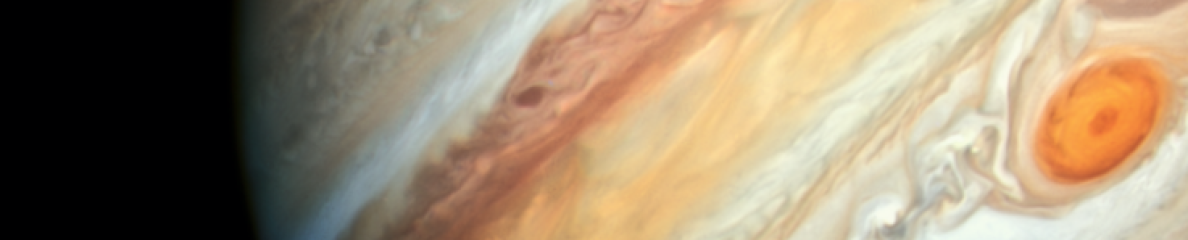
April 4, 2024: Attempt to look for Mars before sunrise to the lower left of the moon. Jupiter is visible after sunset.

by Jeffrey L. Hunt
Chicago, Illinois: Sunrise, 6:28 a.m. CDT; Sunset, 7:20 p.m. CDT. Check local sources for sunrise and sunset times. Times are calculated by the US Naval Observatory’s MICA computer program.

During Monday’s eclipse, look for Venus and Jupiter. As the moon covers a larger chunk of the solar disk, remove your eclipse glasses, extend your open hand to cover the sun, and look for the bright planets. Venus is to the sun’s lower right and Jupiter to the upper left. Venus is easier to locate, about 15° from the sun. Jupiter is nearly double Venus’ solar elongation or angle.
Summaries of Current Sky Events
Summary for Venus as a Morning Star, 2023-24
Here is today’s planet forecast:
Morning Sky
Look for Mars

Forty-five minutes before sunup, the crescent moon, 25% illuminated, is over 10° above the southeast horizon. During mid-twilight, the morning crescent is a pretty sight, beautifully shining through the colorful hues.

Look for earthshine on the night portion, between the cusps or horns. The effect is from sunlight that reflects from Earth’s features. Photograph it with a tripod-mounted camera with exposures up to a few seconds.
Attempt to look for Mars, nearly 25° to the moon’s lower left. At this hour, it is 5° above the east-southeast horizon. It is marginally visible, depending on local sky conditions. Use a binocular to initially find it? Can you see it without the optical assist?
Saturn, less than 5° to Mars’ lower left, is too low and not bright enough for easy visibility. The first attempt to see Saturn is on the 10th, when Mars passes close by.
Venus, rising 28 minutes before the sun is bright, but difficult to see in the predawn light.
Evening Sky
Jupiter and Mercury

After its best evening appearance of the year, Mercury is dim, setting 62 minutes after the sun. It overtakes our planet, passing between Sun and Earth on the 11th. Then it moves into the eastern predawn sky for an unfavorable appearance for northern hemisphere sky watchers.
Bright Jupiter is the easiest bright planet to see. It is “that bright star” in the west after sundown. At 45 minutes after nightfall, it is about 20° up in the west.
The Jovian Giant is moving eastward in front of Aries, over 15° to the upper left of Hamal, the constellation’s brightest star.
By an hour after sundown, other stars in Jupiter’s region are visible, such as Aldebaran, Pleiades, and Hyades. Look at them through a binocular as well as attempt to see some of Jupiter’s four largest moons.
Jupiter and Uranus

Jupiter and Uranus are in the same binocular field. Uranus is relatively easy to see, even in a suburban setting with many outdoor lights. Place Jupiter near the center of the field. Look for Rho Arietis (ρ Ari on the chart) to Jupiter’s right. The star is inside a triangle of three dimmer stars. Depending on the binocular’s field of view, Delta Arietis (δ Ari) is near the upper right edge of the field.
Look for dim 53 Arietis and 54 Arietis between Jupiter and Delta. They are nearly in line with the planet and the brighter star. Notice that 53 is blue-white, while 54 is topaz, similar to Delta.
Uranus, slightly brighter than 53 and 54, is to the upper left of the former and to the left of the latter. The planet is aquamarine. A telescope is needed to see its globe.
Jupiter overtakes Uranus on the 20th, but the planets are low in the west-northwest after sunset.
This evening Jupiter sets less than three hours after sunset and long before midnight.
Tomorrow morning, the crescent moon is closer to Mars, but not in the same binocular field.
RECENT PODCASTS
LATEST ARTICLES
- 2026, May 16: Three Bright Planets are in the Nighttime Sky as Venus Closes in on Jupiter
 May 16, 2026: Saturn emerges from morning twilight while brilliant Venus advances toward Jupiter after sunset. Learn where to find the bright planets.
 - 2026, May 15: Venus Closes the Gap to Jupiter While Saturn Emerges Before Sunrise
 May 15, 2026: Saturn emerges from bright morning twilight near a thin crescent moon, while Venus moves eastward between Taurus’ horns and closes in on Jupiter after sunset.
 - 2026, May 14: Venus Closes in on Jupiter While a Crescent Moon Guides Saturn Before Sunrise
 May 14, 2026: A waning crescent moon points to Saturn before sunrise, while Venus moves past Taurus’ horns and closes the gap to Jupiter in the evening sky.
 - 2026, May 13: Crescent Moon Meets Saturn Before Sunrise While Venus Passes Taurus’ Horns Toward Jupiter
 May 13, 2026: A thin crescent moon guides Saturn’s first morning appearance, while Venus passes between Taurus’ horns and closes in on Jupiter in the evening sky.
 - 2026, May 12: Saturn Returns before Sunrise, Crescent Moon Guides the Ringed Planet While Venus Targets Jupiter
 May 12, 2026: Saturn makes its first morning appearance as a crescent moon guides the way before sunrise, while Venus moves between Taurus’ horns toward Jupiter after sunset.