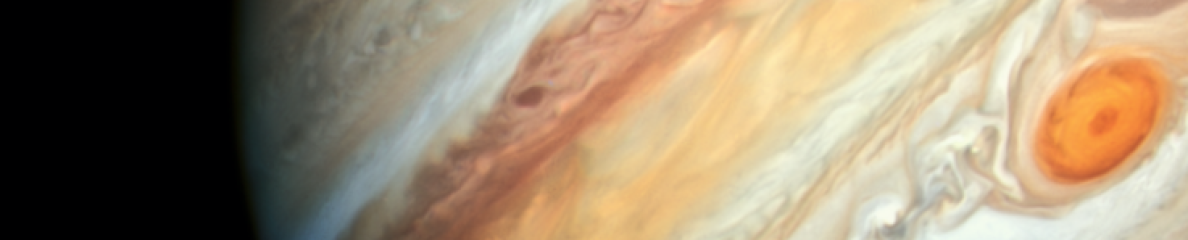
May 18, 2023: Jupiter passes behind the sun today, reappearing in the morning sky in about a month. The gibbous moon is visible after sundown.

by Jeffrey L. Hunt
Chicago, Illinois: Sunrise, 5:27 a.m. CDT; Sunset, 8:08 p.m. CDT. Check local sources for sunrise and sunset times. Times are calculated by the US Naval Observatory’s MICA computer program.
Jupiter, Solar Conjunction
Jupiter passes behind the sun today and begins a climb into the morning sky, reappearing in about a month. For Jupiter, conjunction occurs when the sun is between the Jovian Giant and Earth. The three are in a line.
Venus is near the imaginary line connecting Earth, Sun, and Jupiter. First, this indicates that Venus soon passes by its superior conjunction. Venus and Mercury have two conjunction places, when on the sun’s far side (superior conjunction) and when between Earth and Sun (inferior conjunction).

Secondly, Venus is overtaking Jupiter for a close conjunction on the 23rd. The planets appear very close to the sun and for practical purposes this proximate conjunction is not visible.
Summaries of Current Sky Events
Summary for Venus as a Morning Star, 2023-24
Here is today’s planet forecast:
Morning Sky
Mars and Saturn

Mars and Saturn are in the eastern sky before sunrise. Saturn is easier to see. At one hour before daybreak, the Ringed Wonder is nearly 20° above the east-southeast horizon. The planet is not as bright as Venus or Saturn, although it outshines most stars in the sky this morning.
Mars continues to slowly enter the morning sky. After their conjunction last month, Mars marches eastward faster than Saturn and the Red Planet widens the gap between the planets each morning. This morning it is nearly 10° up in the east and over 25° to Saturn’s lower left. Use a binocular to see it.
Mercury and Venus
Mercury sputters into the sky during bright morning twilight. The planet’s view for northern hemisphere sky watchers is a challenge. At 30 minutes before the sun appears, the planet is less than 5° above the eastern horizon and washed out by the approaching sunrise.
Venus rises only six minutes before the sun. It reaches solar conjunction next month, followed by a wide swing in the west as the Evening Star.
Evening Sky
Evening Moon

An hour after sundown, the gibbous moon (82% illuminated) is halfway up in the southern sky. It is in front of Virgo, over 16° to the upper right of Spica, the pattern’s brightest star, and 3.6° to the lower right of Porrima, also known as Gamma Virginis. With the bright moonlight, use a binocular to see Porrima.
Tonight’s sky is without a bright planet until Saturn rises over three hours before sunrise.
The moon sets after midnight and about two hours before sunrise.
RECENT PODCASTS
LATEST ARTICLES
- 2026, June 1: Venus Overtakes Jupiter in Bright Evening Conjunction Display
 June 1, 2026: Venus rapidly closes the gap to Jupiter in the western sky after sunset while Mercury joins the bright evening planet lineup in Gemini.
 - 2026, May 31: Venus, Jupiter, and Mercury Form Bright Evening Planet Lineup
 May 31, 2026: Venus, Jupiter, and Mercury line up in the western sky after sunset while Venus rapidly closes the gap to Jupiter before their June 9 conjunction.
 - 2026, May 30: Blue Moon Appears with Scorpius While Venus, Jupiter, and Mercury Line Up
 May 30, 2026: A seasonal Blue Moon shines near Antares in Scorpius while Venus, Jupiter, and Mercury form a bright evening lineup in the western sky after sunset.
 - 2026, May 28-31: Blue Moon Passes Libra and Scorpius Near Antares
 May 28-31, 2026: The seasonal Blue Moon passes Libra and Scorpius during late May, appearing near Antares while bright moonlight spreads across the evening sky.
 - 2026, May 25-27: Waxing Gibbous Moon Passes Spica While Venus Closes Gap to Jupiter
 May 25-27, 2026: Watch the waxing gibbous moon pass Spica in Virgo while Venus steadily overtakes Jupiter in the western evening sky before their June 9 conjunction.