June 3, 2024: The Mars and the crescent moon are in the eastern sky before daybreak. At the same time, Saturn is in the southeast.

by Jeffrey L. Hunt
Chicago, Illinois: Sunrise, 5:17 a.m. CDT; Sunset, 8:21 p.m. CDT. Check local sources for sunrise and sunset times. Times are calculated by the US Naval Observatory’s MICA computer program.
Summaries of Current Sky Events
Summary for Venus as a Morning Star, 2023-24
Here is today’s planet forecast:
Morning Sky
Mars, Moon in East

The solar system’s bright bodies are west of the sun, meaning they are in the eastern sky before sunrise, although three of them are in bright predawn light.
One hour before sunrise, the crescent moon, 12% illuminated, is over 10° above the east horizon. It is moving toward its New phase on the 6th and reappearance as an evening razor-thin crescent in the western sky on the 7th.

This morning, look for earthshine on the nighttime portion of the moon, between the lunar cusps or horns. This is from sunlight reflected from Earth’s features that softly lights the lunar night.

This morning Mars is near the lunar crescent, 7.1° to the moon’s upper right. The Red Planet is not bright at this point in its appearance. The pair tightly fits into the same binocular field of view in middle America. For locations farther westward, they are too far apart to see them together, while the view is easier for sky watchers eastward of Chicago’s longitude. The difference is from the moon’s eastward orbital motion opening a gap between the moon and planet.
For example, from Tokyo, Japan, the lunar crescent is slightly thicker and 1.9° above Mars during morning twilight, easily in the same binocular field.
Saturn in Southeast

From middle America, Saturn is over 25° above the southeast horizon and over 35° to the upper right of Mars. Slightly fainter than Mars, the Ringed Wonder is brighter than most stars in the sky, but not as bright as Venus or Jupiter, both in bright twilight this morning.
Venus, Jupiter, and Mercury

Tomorrow Venus passes on the sun’s far side, known as superior conjunction, starting a wide evening apparition in the western sky.
Jupiter is emerging from its solar conjunction into the eastern morning sky. Look for it in a few weeks.
Mercury reaches its superior conjunction 10 days after Venus. This morning it rises only five minutes before Jupiter.
Evening Sky
Amalthea, Jupiter’s Moon

With the bright solar system bodies in the morning sky, let’s consider some recent space news:
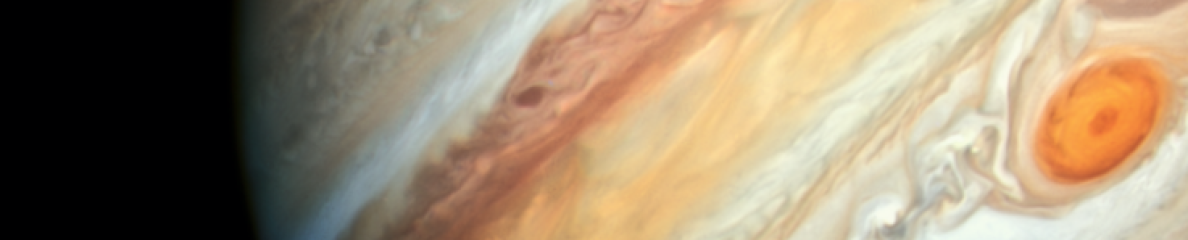
The robot spacecraft Juno spotted the tiny, potato-shaped moon Amalthea on its 59th close passage of Jupiter. The spacecraft is on a long-looping orbital path that takes it closest to Jupiter, known as perijove, every 53 days.
One of the images shows the moon silhouetted against Jupiter’s Red Spot, a long-lived atmospheric disturbance.
With dimensions of 79 miles by 155 miles, Amalthea is the 5th largest Jovian moon, after the four largest – Ganymede, Callisto, Europa, and Io – known as the Galilean satellites for Galileo Galilei. It is one of nearly 100 moons revolving around Jupiter. This moon was first spotted by E.E. Barnard in 1892. The moon does not appear to be a solid mass, but it seems to be a jumbled mass of debris.
Amalthea revolves not far above Jupiter’s cloud tops, less than half of Io’s distance. It revolves three times faster than the closest Galilean.
See more about Juno and Amalthea on the NASA web site.
RECENT PODCASTS
LATEST ARTICLES
- 2026, May 10-13: Moon–Saturn Conjunction, Crescent Moon Guides First Morning View of Saturn
 May 10-13, 2026: On May 13, the crescent moon appears near Saturn before sunrise. Use the moon as a guide to find the Ringed Wonder low in the eastern sky.
 - 2026, May 9: Last Quarter Moon and Evening Planets, Venus Moves Between Taurus’ Horns Toward Jupiter
 May 9, 2026: See the Last Quarter moon before sunrise and track Venus moving between Taurus’ horns as it closes in on Jupiter in the western evening sky.
 - 2026, May 8: Double Moon Shadows on Jupiter: Venus Shines Nearby in Tonight’s Evening Sky
 May 8, 2026: See the shadows of Europa and Ganymede crossing Jupiter’s cloud tops while brilliant Venus shines lower in the western sky after sunset.
 - 2026, May 7: Venus and Jupiter Dominate May Evenings While a Gibbous Moon Visits Sagittarius
 May 7, 2026: Track Venus and Jupiter in the western sky after sundown and find the gibbous moon in front of Sagittarius before sunrise during May evenings.
 - 2026, May 6: Spring Midpoint Sky: Gibbous Moon with Sagittarius, Venus and Jupiter After Sunset
 May 6, 2026: At spring’s midpoint, find the gibbous moon with Sagittarius before sunrise and track Venus overtaking Jupiter in the western evening sky.