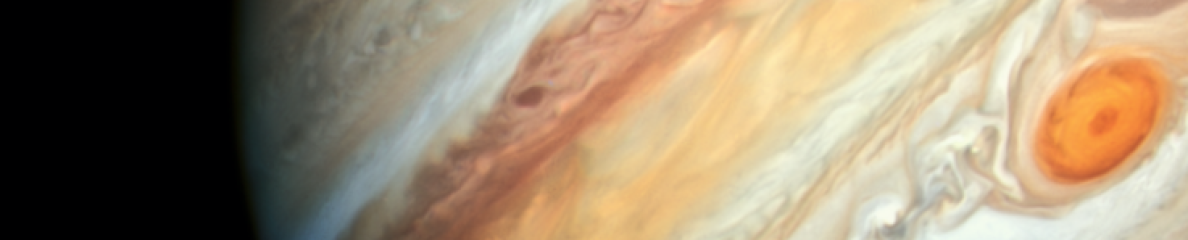
July 27, 2024: Jupiter, Mars, Saturn, and Moon are visible before sunrise. Mercury and Venus hide in bright evening twilight.

by Jeffrey L. Hunt
Chicago, Illinois: Sunrise, 5:40 a.m. CDT; Sunset, 8:14 p.m. CDT. Check local sources for sunrise and sunset times. Times are calculated by the US Naval Observatory’s MICA computer program.
Mercury at Aphelion
Mercury is at its farthest point from the sun, known as aphelion. Its solar distance is 0.466686 Astronomical Unit or 43.4 million miles. One A.U. is 93 million miles in round numbers.
Aphelion is different from greatest elongation. The first value is the planet’s distance from the sun. Greatest elongation is the farthest we see the planet from the sun. This is measured as an angle with Earth at the vertex and sides extended to Mercury and the sun. On the 22nd, Mercury was at this separation, 26.9°.
Here is today’s planet forecast:
Morning Sky
Mars Cuts Gap to Jupiter

An hour before sunrise, Mars continues to close the gap to Jupiter. The bright Jovian Giant is nearly 30° above the eastern horizon and 5.9° to the upper left of Taurus’ brightest star, Aldebaran.
Mars is 9.1° to Jupiter’s upper right and 6.3° below the Pleiades star cluster, muted by this morning’s moonlight.
Orion’s brightest stars continues to climb across the eastern horizon, below the bright planets. Betelgeuse, Bellatrix, and Rigel – making its first morning appearance – are visible. A binocular is needed to see the Hunter’s belt stars.
Morning Saturn

Saturn is less than halfway up in the southern sky. It is in front of Aquarius’ dim stars, awash in moonlight. The star Fomalhaut, the mouth of the Southern Fish, is below the Ringed Wonder.
The slightly gibbous moon, 58% illuminated, is over halfway up in the southeast. The Last Quarter phase occurs at 9:52 p.m. Central Time before moonrise in the Americas.
Evening Sky
Mercury and Venus
While at aphelion, Mercury is in bright sunlight. Its elongation or angle from the sun is 26°. The speedy planet’s visibility is affected by the low angle the solar system’s plane makes with the western horizon and longer twilight at this season. Mercury fades in brightness each night.
In comparison, Venus is moving into the evening sky, but slowly. It sets less than 50 minutes after sundown. Its elongation is 15°. While it is the brightest starlike body in the sky, Venus is overwhelmed by the evening twilight. At month’s end, it is about 3° above the western horizon at 30 minutes after nightfall.
Saturn Rises Later

Saturn rises less than two hours after sundown. An hour later, the planet is over 10° above the east-southeast horizon. Tonight, this about the time the moon rises.
Tomorrow morning, the moon is over 25° to Mars’ upper right.
RECENT PODCASTS
LATEST ARTICLES
- 2026, July 2: Four Bright Planets and the Waning Gibbous Moon
 July 2, 2026: See four bright planets and a waning gibbous moon during the nighttime hours. Find Saturn, Mars, Venus, Jupiter, Uranus, the Pleiades star cluster, and Aldebaran.
 - 2026, July 1: July’s Outlook for the Sun, Moon, and Planets
 July 1, 2026: This is the outlook for the visibility of the moon and planets for July 2026. The moon passes bright stars while the summer noon sun is lower in the sky.
 - 2026, June 30: Full Strawberry Moon Lights the Sky While Venus Approaches Regulus
 June 30, 2026: The Full Strawberry Moon remains a bright nighttime sight while Mars moves away from the Pleiades, Saturn climbs higher in the eastern morning sky, and Venus approaches Regulus before their upcoming conjunction.
 - 2026, June 29: Full Strawberry Moon Lights the Sky as Mars Passes Pleiades
 June 29, 2026: The Full Strawberry Moon shines all night while Mars passes Alcyone, the Pleiades’ brightest star, before sunrise. Find Saturn, Uranus, Venus, and Jupiter during this busy skywatching period.
 - 2026, June 28: Mars Passes the Pleiades While the Strawberry Moon Nears Full Phase
 June 28, 2026: Mars approaches the Pleiades before sunrise while the Strawberry Moon nears Full Moon phase after sunset. Saturn, Venus, Jupiter, and Uranus add to a sky filled with planetary sights.