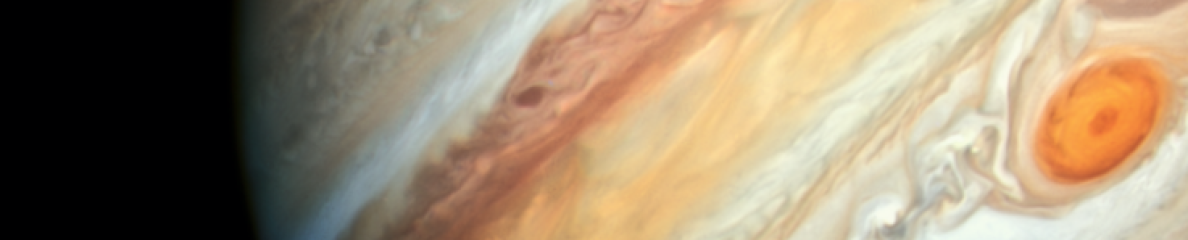
September 26, 2024: The crescent moon passes Pollux, one of the Gemini Twins, before sunrise, a Moon-Pollux conjunction. Bright Jupiter and Mars are in the region. Venus and Saturn are visible after sundown.

PODCAST FOR THIS ARTICLE
by Jeffrey L. Hunt
Chicago, Illinois: Sunrise, 6:43 a.m. CDT; Sunset, 6:40 p.m. CDT. Check local sources for sunrise and sunset times. Times are calculated by the US Naval Observatory’s MICA computer program.
Four Planets Parade

Venus, Saturn, Jupiter, and Mars are visible during the night. The parade of the bright planet begins at sunset. The Evening Star shines through evening twilight’s bright colorful hues. At 30 minutes after sundown, look for it over 6° above the west-southwest horizon. Find a spot with a clear view in that direction.
As the sky darkens further, Saturn appears low in the east-southeast before Venus sets and hour after nightfall. During the night, Saturn appears farther westward. It appears south about four hours after sundown, near the time Jupiter rises in the east-northeast, followed by Mars about an hour later.
Saturn sets over an hour before sunrise, but disappears behind the filtering effects of the air about 30 minutes earlier. During morning twilight Jupiter and Mars are in the southeastern sky.
Here is today’s sky watching highlight:
Moon-Pollux Conjunction

An hour before sunrise, look into the southeastern sky. The crescent moon, 34% illuminated, is over halfway up in the east-southeast, 1.9° to Pollux’ lower right, one of the Gemini Twins, a Moon-Pollux conjunction.
Each month the moon passes the star, but Pollux is too far away from the lunar orb to occult or eclipse it.

Bright Jupiter is high in the south-southeast, nearly 35° to the moon’s upper right. The planet is plodding eastward in front of Taurus, 6.4° to Elnath’s lower right, the Bull’s northern horn. Jupiter is slowing its eastward trek before it begins its retrograde next month.

Mars, marching eastward in front of Gemini, is 12.5° to the moon’s upper right. After their conjunction over a month ago, Mars opened a gap to Jupiter that spans over 21° this morning.
Tomorrow morning, Mars is closer to Pollux and farther from Jupiter. The crescent moon is over 13° to Pollux’s lower left, in front of Cancer and in the same binocular field with the Beehive star cluster.
RECENT PODCASTS
LATEST ARTICLES
- 2026, May 20: Waxing Crescent Moon Near Jupiter as Venus Brightens the Evening Sky
 May 20, 2026: See the waxing crescent moon near Jupiter after sunset while brilliant Venus shines in the west-northwest. Saturn climbs higher before sunrise as Mercury moves into the evening sky.
 - 2026, May 19: Crescent Moon Between Venus and Jupiter After Sunset
 May 19, 2026: See the crescent moon between brilliant Venus and Jupiter after sunset while Saturn climbs higher in the eastern sky before sunrise. Learn where and when to look.
 - 2026, May 18: Closest Venus–Moon Conjunction of the Evening Apparition Lights the Western Sky
 May 18, 2026: See the closest Venus–Moon conjunction of this evening apparition as brilliant Venus shines beside the crescent moon after sunset. Learn when and where to look.
 - 2026, May 17-20: Waxing Crescent Moon Passes Venus and Jupiter in May Evening Sky
 May 17-20, 2026: Watch the waxing crescent moon pass brilliant Venus and Jupiter after sunset. The May 18 Venus–Moon pairing is one of the prettiest sights of the planet’s 2026 evening apparition.
 - 2026, May 16: Three Bright Planets are in the Nighttime Sky as Venus Closes in on Jupiter
 May 16, 2026: Saturn emerges from morning twilight while brilliant Venus advances toward Jupiter after sunset. Learn where to find the bright planets.