November 28, 2024: Four Bright Planets are visible during the nighttime hours. The display begins after sunset with Venus, Saturn and Jupiter. Mars rises later during the evening.

PODCAST FOR THIS ARTICLE
by Jeffrey L. Hunt
Chicago, Illinois: Sunrise, 6:56 a.m. CDT; Sunset, 4:21 p.m. CST. Check local sources for sunrise and sunset times. Times are calculated by the US Naval Observatory’s MICA computer program.
Morning Sky
Four Bright Planets

The nightly planet display ends as dawn’s early light washes across the sky. Bright Jupiter is shifting toward the evening sky as opposition occurs early next month. The planet is visible all night, but not at this hour in two weeks.
This morning an hour before sunrise, Jupiter is less than 20° above the west-northwest horizon and less than 10° above Aldebaran.
Mars

At this hour, Mars, marching eastward in front of Cancer and to Pollux’s upper left, is high in the west-southwest. Mars’ eastward trek is slowing as it begins to retrograde early next month.

Use a binocular to see the Red Planet in the same starfield with the Beehive star cluster. Mars appears in the same binocular field with the stellar bundle until year’s end.
Morning Moon

Look carefully for the crescent moon, 7% illuminated, less than 15° up in the southeast and over 10° to Spica’s lower left, Virgo’s brightest star. It is 9.6° to Zubenelgenubi’s upper right, a star in Libra.
Evening Sky
Four-Planet Display Begins after Sunset

A wonderful planet display is visible along the plane of the ecliptic each evening after sunset. At one hour after nightfall, brilliant Venus shines brightly from the southwest after sunset. Setting nearly three hours after sundown, the planet is 15° above the horizon two hours earlier.
Through a telescope, the planet displays a phase that is 68% illuminated, an evening gibbous Venus.
Saturn

Saturn is farther eastward. It slowly moves eastward in front of Aquarius. It is not bright like Venus or Jupiter, but it is the brightest star in the region. During the early evening, in the southern sky to the upper left of the star Fomalhaut.
Jupiter

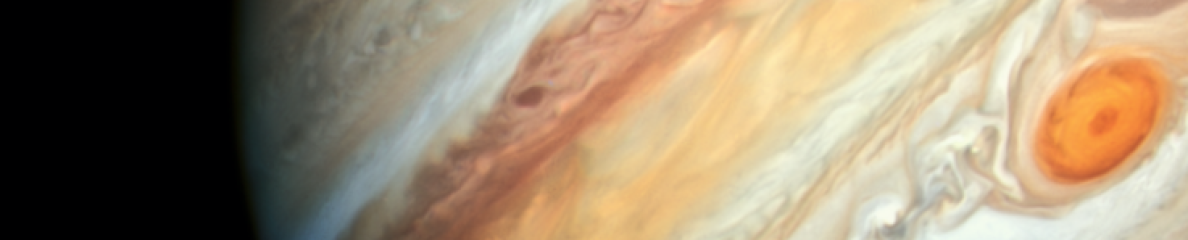
Bright Jupiter rises in the east-northeast about 30 minutes after sunset and it shines brightly in the eastern sky during the early evening. The Jovian Giant retrogrades in front of Taurus between Aldebaran, the constellation’s brightest star, and the horns, Elnath and Zeta Tauri. It is farther westward during the night, shining from high in the south around midnight.
Look for Venus and Jupiter simultaneously, but in opposite directions, beginning about 90 minutes after sundown for about 45 minutes or until Venus disappears behind the local features.
Mars at Back of Nightly Display

Mars is the fourth planet in the nightly display. It rises in the east-northeast over four hours after nightfall. Two hours later and before midnight, it is about 20° up in the east. It is nearly 15° below Castor.
Saturn sets after midnight while Jupiter and Mars are farther westward. By tomorrow morning they are in the western sky again.
RECENT PODCASTS
LATEST ARTICLES
- 2026, July 1: July’s Outlook for the Sun, Moon, and Planets
 July 1, 2026: This is the outlook for the visibility of the moon and planets for July 2026. The moon passes bright stars while the summer noon sun is lower in the sky.
 - 2026, June 30: Full Strawberry Moon Lights the Sky While Venus Approaches Regulus
 June 30, 2026: The Full Strawberry Moon remains a bright nighttime sight while Mars moves away from the Pleiades, Saturn climbs higher in the eastern morning sky, and Venus approaches Regulus before their upcoming conjunction.
 - 2026, June 29: Full Strawberry Moon Lights the Sky as Mars Passes Pleiades
 June 29, 2026: The Full Strawberry Moon shines all night while Mars passes Alcyone, the Pleiades’ brightest star, before sunrise. Find Saturn, Uranus, Venus, and Jupiter during this busy skywatching period.
 - 2026, June 28: Mars Passes the Pleiades While the Strawberry Moon Nears Full Phase
 June 28, 2026: Mars approaches the Pleiades before sunrise while the Strawberry Moon nears Full Moon phase after sunset. Saturn, Venus, Jupiter, and Uranus add to a sky filled with planetary sights.
 - 2026, June 27: Mars Nears the Pleiades as the Strawberry Moon Approaches Full
 June 27, 2026: Mars closes in on the Pleiades before sunrise while the Strawberry Moon nears Full Moon phase. Saturn, Venus, Jupiter, Uranus, and Neptune add to a sky filled with planetary targets.