September 13, 2025: Mercury reaches superior conjunction on the far side of the sun. Before sunrise, Venus climbs in the east toward Regulus, while Jupiter and the moon brighten the morning sky. Saturn appears after sunset as its opposition nears.

by Jeffrey L. Hunt
Chicago, Illinois: Sunrise, 6:29 a.m. CDT; Sunset, 7:03 p.m. CDT. Times are calculated by the US Naval Observatory’s MICA computer program. Check local sources for sunrise and sunset times.
Related Articles
Venus Summary Article
Mercury at Superior Conjunction

Mercury is at superior conjunction today on the sun’s far side, where the sun is between Earth and the speedy planet. While this is not easily visible because the sun’s brightness can damage eye sight, it signals that Mercury is moving to the western evening sky. When it seems farthest from the sun next month, it makes a poor showing for sky watchers in the northern hemisphere.
Moon is too Bright to See Five Planets
Meanwhile, three bright planets and the moon are visible before sunrise. The moonlight washes out Uranus and Neptune. We’ll begin looking for them again when the moon phase wanes to a morning crescent.
A rare grouping of Venus and crescent moon occurs with Regulus on the 19th. Still widely separated, watch the planet and moon move toward the star.
Morning’s view
At 45 minutes before sunrise:

- The bright moon, 61% illuminated, is high in the southern sky. It is 10.7° to Aldebaran’s upper right, Taurus’ brightest star. Elnath, one of the Bull’s horns, is over 15° to the upper left.

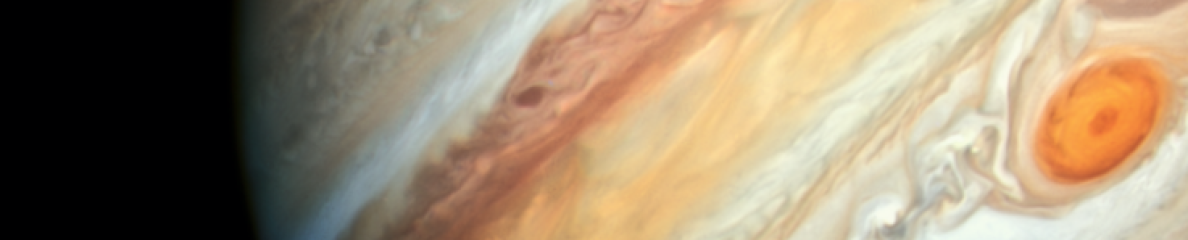
- Farther eastward, bright Jupiter is halfway up in the east-southeast. It moves eastward slowly in front of Gemini, 7.7° to Pollux’s lower right, one of the Twins. It is nearly 45° from the lunar orb.

- Lower in the eastern sky, brilliant Venus, about 20° above the horizon, is 7.6° to Regulus’ upper right, Leo’s brightest star.
After Sunset
- Mars is blotted out by bright evening twilight. It passes Spica tonight in the western sky, though the conjunction is not visible.

- Saturn rises in the eastern sky less than 30 minutes after sunset. It is in the sky nearly all night, as its opposition with the sun approaches.

- The gibbous moon, 52% illuminated, rises over three hours after sunset. Around midnight, the lunar orb is low in the east-northeast, 13.5° to the left of Aldebaran and 3.9° to the upper right of Elnath. Tomorrow morning, the moon occults or eclipses this star from the southern US and Mexico. The moon phase is Last Quarter or a morning half-full phase tomorrow morning at 5:33 a.m. CDT.
From morning to morning, Venus and the moon make their way eastward to nearly converge at Regulus.
LATEST ARTICLES
- 2026, June 21: Summer Solstice Sky: Five Planets and a Farewell to Mercury
 June 21, 2026: Celebrate the first night of summer with five visible planets, a First Quarter Moon, Mars approaching the Pleiades, and Mercury fading into evening twilight.
 - 2026, June 20: Venus Near the Beehive Cluster While Mars Approaches the Pleiades
 June 20, 2026: Venus remains near the Beehive Cluster after sunset while Jupiter and Mercury share the evening sky. Before sunrise, Mars approaches the Pleiades and Saturn brightens in the east.
 - 2026, June 19: Venus Passes the Beehive Cluster While Moon Shines Near Regulus
 June 19, 2026: Brilliant Venus passes the Beehive Cluster after sunset while the waxing crescent moon appears near Regulus. Saturn and Mars remain visible before sunrise in the eastern sky.
 - 2026, June 18: Summer Solstice Nears as Crescent Moon Lines Up with Venus, Jupiter, and Mercury
 June 18, 2026: As the solstice approaches, a waxing crescent moon joins Venus, Jupiter, and Mercury after sunset while Saturn and Mars shine before sunrise. Learn where to look for the planets.
 - 2026, June 17: Daytime Venus Occultation and Evening Crescent Moon with Three Planets
 June 17, 2026: Watch the crescent moon occult Venus during daylight across North America, then see the moon, Venus, Jupiter, Mercury, and the Beehive Cluster after sunset.