October 28, 2025: Three bright planets — Venus, Jupiter, and Saturn — join the waxing moon in this week’s sky. Find viewing times for all major planets, including Uranus near the Pleiades and Neptune near Saturn, with details for Chicago’s latitude.

by Jeffrey L. Hunt
Chicago, Illinois: Sunrise, 7:19 a.m. CDT; Sunset, 5:50 p.m. CDT. Times are calculated by the US Naval Observatory’s MICA computer program. Check local sources for sunrise and sunset times.
Related Articles
Venus Summary Article
Today’s Almanac for Sun, Moon, and Planets
Sun: Daylight at Chicago’s latitude lasts 10 hours, 31 minutes. The sun passes overhead at local noon for latitude 13° south.

Moon: The lunar orb, 43% illuminated, is in the south during evening twilight. The evening half, or First Quarter phase, occurs tomorrow at 12:21 p.m. Central Time. It sets less than four hours after sundown.
Inner Planets
Mercury: The solar system’s innermost planet nears its greatest elongation but remains hidden in bright evening twilight. At sunset, Mercury is less than 10° above the southwest horizon, setting about 50 minutes after the sun. At this season, the plane of the solar system (ecliptic) makes a very shallow angle with the western horizon, so Mercury’s visibility is poor for this evening appearance. In the southern hemisphere, the planet is putting on a magnificent display after sundown.

Venus:The Morning Star continues to recede into morning twilight as its superior conjunction occurs on January 6. During morning twilight, Venus is less than 10° above the eastern horizon. Look for Arcturus, the second-brightest star visible at mid-northern latitudes, over 30° to Venus’ upper left.
Outer Planets
Mars: Near Mercury in the western sky and veiled by bright evening twilight, the Red Planet is moving toward its solar conjunction on January 9. Afterward, it begins a slow climb into the eastern morning sky.

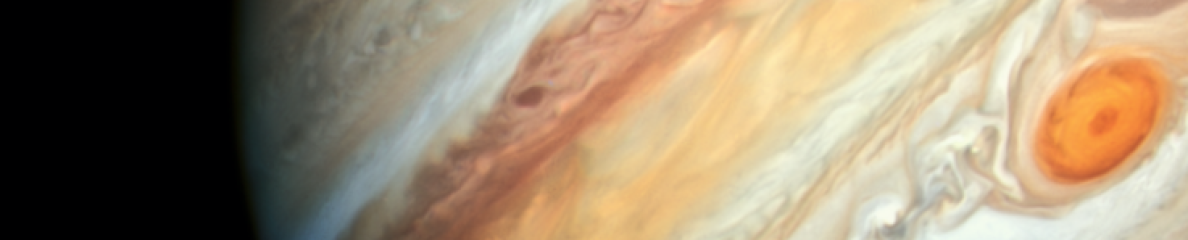
Jupiter: The Jovian Giant is in the sky from about midnight until it disappears into morning twilight when it is high in the south-southwest. It rambles eastward in front of Gemini, nearly 7° from Pollux, one of the Twins. Through a telescope, the planet displays four large moons and cloud stripes. Around 02:35 UTC tomorrow, the shadows of two of its moons are projected on the planet’s clouds.

Saturn: The lone bright evening planet until Jupiter rises is in the east-southeast after sundown. The Ringed Wonder is south about four hours after sunset, making it a good target for backyard telescopes. Saturn’s rings appear as a narrow line, as though viewing the rim of a dinner plate. This viewing angle occurs about every 15 years.

Uranus: The Tilted World is visible from a rural location without optical aid. It rises about an hour after sunset and is in the same binocular field with the Pleiades star cluster, resembling a miniature dipper. It is best viewed from about 10 p.m. local time until morning twilight begins. Aquamarine Uranus shines about as brightly as 13, 14, 32, and 37 Tauri (Tau).

Neptune:The modern solar system’s most distant planet is a challenge to see. It appears in the same binocular field as Saturn, though it is over three times farther away. Attempt to view it when it is in the south with Saturn. It is quite dim—only 0.2% of Saturn’s brightness. Find the stars 27 and 29 Piscium (Psc). They are about the brightness of Uranus and 13 times brighter than Neptune. The planet appears as a very dim bluish star above 27 and 29 in the field. Slowly move your eye around the view to detect it with your peripheral vision.
Catch Uranus and Neptune before the waxing moon fills the sky with bright moonlight during the next few nights. Find Venus, Jupiter, and Saturn as the moon reaches the First Quarter phase.
LATEST ARTICLES
- 2026, July 1: July’s Outlook for the Sun, Moon, and Planets
 July 1, 2026: This is the outlook for the visibility of the moon and planets for July 2026. The moon passes bright stars while the summer noon sun is lower in the sky.
 - 2026, June 30: Full Strawberry Moon Lights the Sky While Venus Approaches Regulus
 June 30, 2026: The Full Strawberry Moon remains a bright nighttime sight while Mars moves away from the Pleiades, Saturn climbs higher in the eastern morning sky, and Venus approaches Regulus before their upcoming conjunction.
 - 2026, June 29: Full Strawberry Moon Lights the Sky as Mars Passes Pleiades
 June 29, 2026: The Full Strawberry Moon shines all night while Mars passes Alcyone, the Pleiades’ brightest star, before sunrise. Find Saturn, Uranus, Venus, and Jupiter during this busy skywatching period.
 - 2026, June 28: Mars Passes the Pleiades While the Strawberry Moon Nears Full Phase
 June 28, 2026: Mars approaches the Pleiades before sunrise while the Strawberry Moon nears Full Moon phase after sunset. Saturn, Venus, Jupiter, and Uranus add to a sky filled with planetary sights.
 - 2026, June 27: Mars Nears the Pleiades as the Strawberry Moon Approaches Full
 June 27, 2026: Mars closes in on the Pleiades before sunrise while the Strawberry Moon nears Full Moon phase. Saturn, Venus, Jupiter, Uranus, and Neptune add to a sky filled with planetary targets.