November 30, 2025: A waxing gibbous moon, Jupiter and Saturn in the evening sky, and Mercury’s best morning appearance of the year highlight today’s celestial almanac.

by Jeffrey L. Hunt
Chicago, Illinois: Sunrise, 6:58 a.m. CST; Sunset, 4:21 p.m. CST. Times are calculated by the US Naval Observatory’s MICA computer program. Check local sources for sunrise and sunset times.
Related Articles
Venus Summary Article
Almanac for Sun, Moon, and Planets
Sun: At Chicago’s latitude daylight lasts 9 hours, 23 minutes. The earliest sunset occurs December 3–14, with the latest sunrise from December 28–January 10. Today in Miami, daylight spans 10 hours, 39 minutes, while Anchorage has only 6 hours, 20 minutes. The sun appears farther southward, overhead at noon at latitude 22° south, near the Tropic of Capricorn.
Moon: The waxing gibbous moon, 78% illuminated, is less than halfway from the southeast horizon to overhead. The Full moon phase occurs on December 4th at 5:14 p.m. Central Time. After sunset, the lunar orb is nearly 20° from Saturn.
Inner Planets

Mercury: The innermost planet dashes into the eastern morning sky for its best morning appearance of the year. Even at its best, Mercury is low in the sky. At 45 minutes before daybreak, it is less than 10° up in the east-southeast, below the Scorpion’s claws, Zubenelgenubi and Zubeneschamali. While brighter than most stars, find a clear horizon in its direction and initially locate it with a binocular.
Venus: The Morning Star disappears into bright morning light. It is heading toward its superior conjunction on the sun’s far side early next year. Venus aficionados with a clear natural horizon or an elevated structure can find it above the east-southeast horizon at 30 minutes before sunup.
Outer Planets
Mars: The Red Planet has been obscured by bright evening twilight for several weeks. Mars sets a little over 30 minutes after sunset. It reaches solar conjunction early next year and begins a new apparition and its first morning appearance later in 2026.

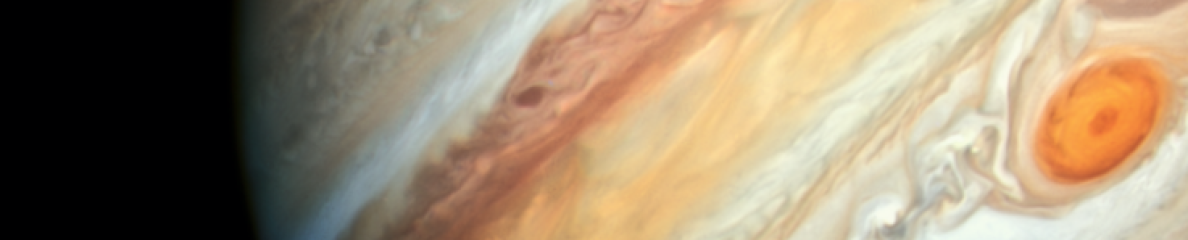
Jupiter: With Venus’ departure from the morning sky, Jupiter dominates the sky for most of the night. It rises in the east-northeast about three hours after sundown — not so late with the early sunsets of autumn. It retrogrades in front of Gemini near Pollux. During the night, as Earth rotates, Jupiter and the background stars rise higher in the eastern sky. The Jovian Giant is south after midnight and four hours before sunrise. During morning twilight, it is about halfway up in the western sky, 6.6° to Pollux’s lower left.

Saturn: Well-placed for telescopic examination in the southeast after sunset, Saturn slowly moves eastward in front of Pisces. Its rings are visible nearly from the edge — a view that occurs about every 15 years. The planet is in the south, its best viewing spot, nearly three hours after sunset.
Uranus: Slowly retrograding in the same binocular field with the Pleiades star cluster, Uranus rises shortly before sunset and is high in the south near midnight. With this moonlight, look for the Tilted Planet when the moon returns to the waning crescent phase and its light is less intrusive.
Neptune: The most distant planet in the solar system is in the same binocular field with Saturn. Neptune is very dim and its visibility is obliterated by moonlight.
Find the three bright planets — Jupiter, Saturn, and Mercury — that are easy to see, as well as the gibbous moon during the nighttime hours.
LATEST ARTICLES
- 2026, May 10-13: Moon–Saturn Conjunction, Crescent Moon Guides First Morning View of Saturn
 May 10-13, 2026: On May 13, the crescent moon appears near Saturn before sunrise. Use the moon as a guide to find the Ringed Wonder low in the eastern sky.
 - 2026, May 9: Last Quarter Moon and Evening Planets, Venus Moves Between Taurus’ Horns Toward Jupiter
 May 9, 2026: See the Last Quarter moon before sunrise and track Venus moving between Taurus’ horns as it closes in on Jupiter in the western evening sky.
 - 2026, May 8: Double Moon Shadows on Jupiter: Venus Shines Nearby in Tonight’s Evening Sky
 May 8, 2026: See the shadows of Europa and Ganymede crossing Jupiter’s cloud tops while brilliant Venus shines lower in the western sky after sunset.
 - 2026, May 7: Venus and Jupiter Dominate May Evenings While a Gibbous Moon Visits Sagittarius
 May 7, 2026: Track Venus and Jupiter in the western sky after sundown and find the gibbous moon in front of Sagittarius before sunrise during May evenings.
 - 2026, May 6: Spring Midpoint Sky: Gibbous Moon with Sagittarius, Venus and Jupiter After Sunset
 May 6, 2026: At spring’s midpoint, find the gibbous moon with Sagittarius before sunrise and track Venus overtaking Jupiter in the western evening sky.