January 24, 2024: Before sunrise and after sunset, the moon is with Pollux. Venus, Jupiter, and Saturn are easily seen during nighttime hours.

by Jeffrey L. Hunt
Chicago, Illinois: Sunrise, 7:11 a.m. CST; Sunset, 4:55 p.m. CST. Check local sources for sunrise and sunset times. Times are calculated by the US Naval Observatory’s MICA computer program.
Summaries of Current Sky Events
Summary for Venus as a Morning Star, 2023-24
Here is today’s planet forecast:
Morning Sky
Moon with Pollux

The nearly-full moon, 98% illuminated, is low in the west-northwest at an hour before sunrise. The moon is at its official Full moon phase tomorrow at 11:54 a.m. CST.
This morning the moon is below Castor and Pollux, the Gemini Twins. It is 4.7° to the lower right of Pollux and 5.9° to the lower left of Castor. With the bright moonlight cast across the sky, block the lunar disk with your hand as you would to block the sun to see the stellar pair.
Venus

Farther eastward, brilliant Venus is in the southeast. The Morning Star rises over two hours before the sun. By forty-five minutes before sunrise, it is over 10° above the horizon. The planet is stepping eastward in front of Sagittarius.
Mercury and Mars

Mercury is bright but difficult to locate. By thirty minutes before sunrise, Mercury aficionados can find it through a binocular over 5° above the southeast horizon and 2.2° to the upper right of Mars.
The Red Planet is about to make its first appearance in the morning sky after its solar conjunction two months ago, although it is a challenging view through a binocular. Mercury passes in a close conjunction in three mornings. Venus passes Mars on February 22nd.
Evening Sky
Evening Moon, Pollux

An hour after sundown, the bright moon, 99% illuminated, is over 20° above the east-northeast horizon and 3.9° below Pollux. During the daytime in the western hemisphere, the moon appeared to pass Pollux. This evening’s position is east of the star compared to this morning when the lunar orb was west of the star.
Jupiter

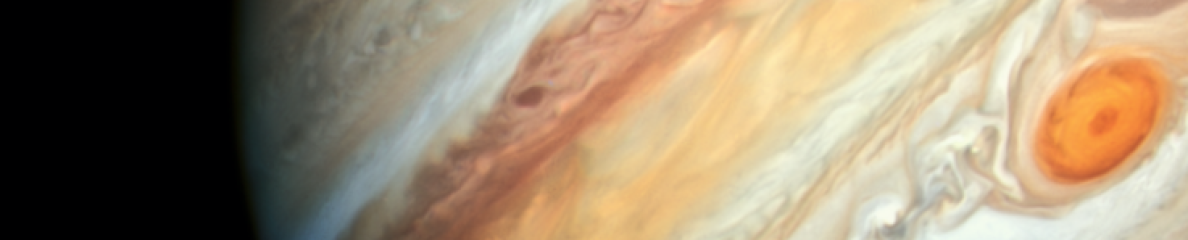
At this hour, bright Jupiter is high in the south. This evening and until it disappears into bright sunlight during April, the Jovian Giant appears west of the south cardinal direction at an hour after sundown.
Jupiter is slowly moving eastward in front of Aries, 11.1° to the lower left of Hamal, the Ram’s brightest star, and 14.0° to the upper right of Menkar, part of Cetus. The planet is slowly approaching an imaginary line between the two stars.
Saturn

When the sky is dark, Saturn is over 15° above the west-southwest horizon and nearly 20° to the upper right of Fomalhaut, although this star is low in the sky. During the next several evenings, the star disappears into the haze that blurs and dims celestial objects.
The Ringed Wonder sets over two hours after sundown. Jupiter sets in the west-northwest, shortly after the new calendar day begins. The bright Wolf moon is less than 15° above the west-northwest horizon during twilight tomorrow morning.
RECENT PODCASTS
LATEST ARTICLES
- 2026, June 16-17: Moon Passes Venus, Jupiter, and Mercury During June Evening Sky Display
 June 16-17, 2026: See the crescent moon join Venus, Jupiter, and Mercury after sunset on. Earthshine, the Beehive Cluster, and Mercury’s fading appearance add to the evening sky show.
 - 2026, June 15: Capella Shines in Morning and Evening Twilight While Mercury Reaches Greatest Elongation
 June 15, 2026: Capella is visible before sunrise and after sunset while Mercury reaches greatest elongation near Jupiter. See Saturn, Mars, Venus, and Jupiter in today’s sky.
 - 2026, June 14: New Moon Begins New Lunar Cycle While Venus, Jupiter, and Mercury Shine After Sunset
 June 14, 2026: The moon reaches New phase and begins lunation 1280. See Venus, Jupiter, and Mercury after sunset, while Saturn and Mars improve in the eastern sky before sunrise.
 - 2026, June 13: Five Bright Planets and the Crescent Moon Span the Nighttime Sky
 June 13, 2026: See all five bright planets during nighttime hours. Venus, Jupiter, and Mercury shine after sunset, while Saturn, Mars, and a thin crescent moon appear before sunrise.
 - 2026, June 12: Venus Pulls Away from Jupiter as Mercury Approaches Greatest Elongation
 June 12, 2026: Venus widens its gap from Jupiter after conjunction while Mercury approaches greatest elongation. Before sunrise, the crescent moon appears above Mars with Saturn nearby.