May 21, 2023: The moon nears the Scorpion’s claws. Mars and Saturn are in the eastern sky before sunrise. Mercury, Venus, and Jupiter are lost in sunlight.

by Jeffrey L. Hunt
Chicago, Illinois: Sunrise, 5:25 a.m. CDT; Sunset, 8:10 p.m. CDT. Check local sources for sunrise and sunset times. Times are calculated by the US Naval Observatory’s MICA computer program.
Solstice Approaches
With the solstice 30 days away, daylight’s length is already nearing its maximum. Today’s length is 14 hours, 45 minutes at Chicago’s latitude. On the solstice the length is 15 hours, 13 minutes.
Summaries of Current Sky Events
Summary for Venus as a Morning Star, 2023-24
Here is today’s planet forecast:
Morning Sky
Morning Gibbous Moon

Two hours before sunrise, the bright gibbous moon, 95% illuminated, is above the west-southwest horizon. The Full moon phase, this month named the Flower Moon, is two mornings away. It sets in most of the Americas before the moon reaches the official Full phase.
This morning, the Scorpion’s claws, Zubenelgenubi and Zubeneschamali, are to the moon’s upper left. Zubenelgenubi, the southern pincer, is over 11° from the moon. This evening, notice the moon’s place compared to the distant star and this morning’s location.
Morning Planets

An hour later, Mars and Saturn are in the eastern sky. Saturn is nearly 20° above the east-southeast horizon. It slowly moves eastward against the distant starfield, that is without bright stars.
Mars, slightly brighter and quicker than the Ringed Wonder, marches eastward and continues to widen a gap to the more-distant planet. This morning the Red Planet is nearly 10° above the east horizon and nearly 30° to Saturn’s lower left.
The three other bright planets are west of the sun, rising during bright morning twilight. At thirty minutes before daybreak, Mercury is less than 5° above the eastern horizon. Its visibility is challenging, but the planet brightens during this phase of twilight.
Venus is heading toward its solar conjunction, on the sun’s far side, next month. This is followed by a bright apparition in the western evening sky.
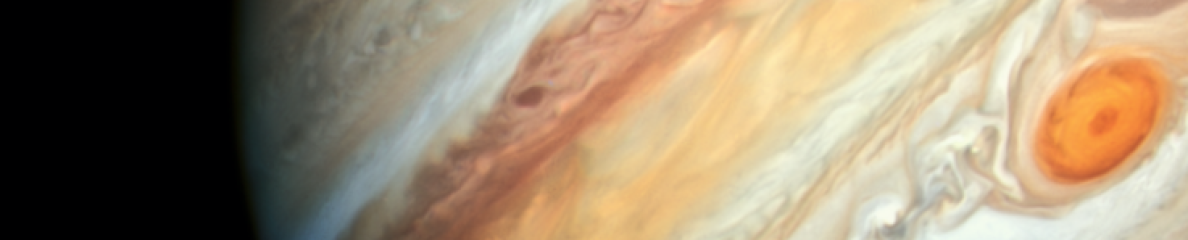
Jupiter is moving into the morning sky after its solar conjunction three days ago.
A very close Venus-Jupiter conjunction occurs in two mornings, but the pair is too close to the sun for easy visibility.
Evening Sky
Evening Gibbous Moon Near Southern Claw

An hour after sundown, the gibbous moon, 98% illuminated, is over 20° above the southeast horizon and over 20° to Spica’s lower left.
Look carefully for Zubenelgenubi, the Scorpion’s southern claw, 3.5° to the lunar orb’s upper left. To view the star, block the moon with your extended open hand, similar to blocking the bright sun or use a binocular. The moon may leave a temporary afterimage in eyesight as from a “spot” from a camera flash.
In two evenings, the moon occults or eclipses the star Antares, representing the Scorpion’s heart in celestial artwork, from the Caribbean basin, Central America, Africa, and the American Southeast. The event ends as the moon rises from the American Midwest. It is not visible from western time zones.
Rosy Antares rises about an hour after sundown. An hour later it is less than 10° above the east-southeast horizon.
The moon sets about an hour before sunrise tomorrow morning.
With all the bright planets west of the sun, this ends today’s planet forecast.
RECENT PODCASTS
LATEST ARTICLES
- 2026, June 1: Venus Overtakes Jupiter in Bright Evening Conjunction Display
 June 1, 2026: Venus rapidly closes the gap to Jupiter in the western sky after sunset while Mercury joins the bright evening planet lineup in Gemini.
 - 2026, May 31: Venus, Jupiter, and Mercury Form Bright Evening Planet Lineup
 May 31, 2026: Venus, Jupiter, and Mercury line up in the western sky after sunset while Venus rapidly closes the gap to Jupiter before their June 9 conjunction.
 - 2026, May 30: Blue Moon Appears with Scorpius While Venus, Jupiter, and Mercury Line Up
 May 30, 2026: A seasonal Blue Moon shines near Antares in Scorpius while Venus, Jupiter, and Mercury form a bright evening lineup in the western sky after sunset.
 - 2026, May 28-31: Blue Moon Passes Libra and Scorpius Near Antares
 May 28-31, 2026: The seasonal Blue Moon passes Libra and Scorpius during late May, appearing near Antares while bright moonlight spreads across the evening sky.
 - 2026, May 25-27: Waxing Gibbous Moon Passes Spica While Venus Closes Gap to Jupiter
 May 25-27, 2026: Watch the waxing gibbous moon pass Spica in Virgo while Venus steadily overtakes Jupiter in the western evening sky before their June 9 conjunction.