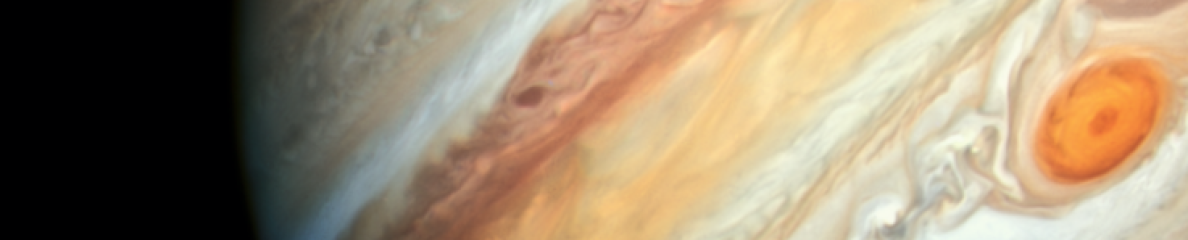
June 16, 2024: During morning twilight, preview Jupiter’s morning appearance in the east-northeast. Mars and Saturn are in the region. After nightfall, the gibbous moon is near Spica.

by Jeffrey L. Hunt
Chicago, Illinois: Sunrise, 5:15 a.m. CDT; Sunset, 8:28 p.m. CDT. Check local sources for sunrise and sunset times. Times are calculated by the US Naval Observatory’s MICA computer program.
Here is today’s planet forecast:
Morning Sky
Mars and Saturn

Three bright planets are west of the sun, rising before daybreak. At one hour before sunrise, during morning twilight, Saturn is one-third of the way from the southeast horizon to overhead. Dimmer than might be expected, the planet appears as a yellow-orange star. It is brighter than most stars in the sky this morning. Compare it to Fomalhaut, the 13th brightest star for northern hemisphere skywatchers.
Red-Orange Mars is farther east, nearly 20° above the eastern horizon and over 45° to Saturn’s lower left. After their conjunction on April 10th, Mars has opened a wide gap to the Ringed Wonder.
Jupiter in Morning Sky

At this hour, Jupiter is a few degrees above the east-northeast horizon, about 30° to Mars’ lower left. Venus and Jupiter are visible when they are near the horizon, because their light is not affected as much as the other planets, mainly because they are noticeably brighter than all the nighttime stars.
Wait another 15 minutes and Jupiter is 5° above the horizon. At this level of twilight, a binocular is needed to spot Mars. In a few mornings, Jupiter is high enough to see earlier during twilight. At one hour before sunrise on solstice morning, the Jovian Giant is about the same altitude as it is this morning when Jupiter, Mars and Saturn span nearly 80° across the eastern morning sky.
As Mars widens a gap to Saturn, it overtakes Jupiter. Their conjunction occurs on August 14th when the Red Planet passes 0.3° above the solar system’s largest world.
Evening Sky
Mercury and Venus
Venus and Mercury are east of the sun and considered evening planets, although they are tucked into bright twilight. Venus passed superior conjunction, on the sun’s far side, on the 4th, while Mercury passed that configuration only two days ago. They set less than 20 minutes after nightfall.
Gibbous Moon and Spica

Forty minutes later, as darkness falls, the bright gibbous moon, 76% illuminated, is less than halfway up in the south-southwest. Earlier today, the lunar orb occulted or eclipsed Spica for sky watchers in Asia. From North America, the moon is 3.9° to the lower left of the star.
On July 13th, the moon occultation occurs for sky watchers across North America. It is the second of 20 Moon-Spica occultations that last through November of 2025.
Tonight, the moon sets after midnight and over three hours before daybreak.
RECENT PODCASTS
LATEST ARTICLES
- 2026, May 30: Blue Moon Appears with Scorpius While Venus, Jupiter, and Mercury Line Up
 May 30, 2026: A seasonal Blue Moon shines near Antares in Scorpius while Venus, Jupiter, and Mercury form a bright evening lineup in the western sky after sunset.
 - 2026, May 28-31: Blue Moon Passes Libra and Scorpius Near Antares
 May 28-31, 2026: The seasonal Blue Moon passes Libra and Scorpius during late May, appearing near Antares while bright moonlight spreads across the evening sky.
 - 2026, May 25-27: Waxing Gibbous Moon Passes Spica While Venus Closes Gap to Jupiter
 May 25-27, 2026: Watch the waxing gibbous moon pass Spica in Virgo while Venus steadily overtakes Jupiter in the western evening sky before their June 9 conjunction.
 - 2026, May 23-29: Venus Overtakes Jupiter During May Evening Sky Display
 May 23-29, 2026: Watch Venus rapidly close the gap to Jupiter with Gemini during late May evenings. Follow the bright planets past Pollux, Alhena, Mebsuta, and other notable Gemini stars.
 - 2026, May 22-24: Waxing Moon Passes Leo While Venus and Jupiter Shine After Sunset
 May 22-24, 2026: Watch the waxing moon move through Leo after sunset while brilliant Venus and Jupiter shine in the western sky. Learn how to find Regulus, Denebola, and the Sickle of Leo.