December 24, 2024: After sundown on Christmas Eve, four bright planets – Venus, Saturn, Jupiter, and Mars are strung across the sky from east-northeast to west-southwest – a planet spectacle.

by Jeffrey L. Hunt
Chicago, Illinois: Sunrise, 7:16 a.m. CDT; Sunset, 4:25 p.m. CST. Check local sources for sunrise and sunset times. Times are calculated by the US Naval Observatory’s MICA computer program.
For morning sky watchers, see these articles:
- 2024, December 21-31: Mars Marches Retrograde
- 2024, December 22-27: Morning Moon Wanes Eastward
- 2024, December 23-27: Spot Mercury Before Sunrise, Greatest Elongation
Christmas Eve Planet Spectacle

Four bright planets are visible during the early evening hours. Begin with Venus in the southwestern sky. The brilliant Evening Star outshines all stars tonight. If the sky is exceptionally clear, it is visible as early as 30 minutes after sundown, nearly 30° above the south-southwest horizon.
At an hour after sundown, Venus is over 20° above the southwest horizon, 3.9° to the lower right of Deneb Algedi, Capricornus’ tail. A binocular might be needed to see the star that is visible to the unassisted eye, but it is only 0.1% of Venus’ visual intensity. Venus passes the star in three evenings.
For sky watchers living near major airports, Venus’ intensity rivals the lights on airliners on their approach and departure patterns. For this sky watcher when standing outside without a binocular, it is sometimes necessary to wait a minute or so to tell the difference between Venus and the airplanes.
As Venus steps eastward, it is overtaking Saturn, less than 25° to its upper left. Saturn is not as bright as Venus or Jupiter that is in the eastern sky. Venus passes by the slower-moving and more-distant world on January 18. Watch Venus close the gap to Saturn during the next few weeks.
Jupiter Gleams in Eastern Sky

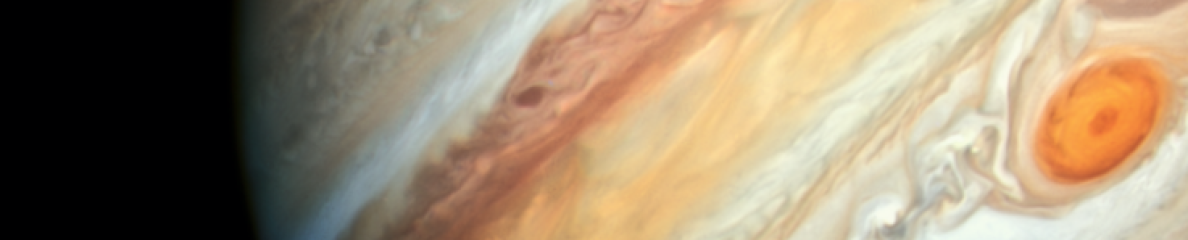
At this hour, bright Jupiter is 25° up in the east. It retrogrades – appears to move westward from night to night compared to the starry background – in front of Taurus, 6.0° to Aldebaran’s upper left, the Bull’s brightest star and 10.7° to Elnath’s upper right, the northern horn.
Earth passed between Jupiter and the sun on the 7th, known as opposition. The Jovian Giant continues to retrograde until February 4th, 2025. Watch the gap between the planet and Elnath grow, while decreasing the separation to Aldebaran.
A sparkling ornament in the Christmas Eve sky, Jupiter is only 25% of Venus brightness tonight.
Mars Joins the View

Mars rises 126 minutes after nightfall. By three hours after sundown, it is nearly 10° up in the east and 10.7° below Pollux, a Gemini Twin. The planet resembles Aldebaran’s color, but it is brighter than the star, but only 20% of Jupiter’s brightness. At this hour, it is the third brightest starlike body, after Venus and Jupiter. Sirius, when it rises, outranks the Red Planet’s brightness.
Mars retrogrades in front of Cancer and in the same binocular field with the Beehive star cluster. Look for them when the planet is higher in the sky later tonight or after midnight when Mars.
Plan to See this Christmas Eve Planet Spectacle
At three hours after sunset, the four bright evening planets seem to hang as ornaments from the ecliptic from the east-northeast to west-southwest. Stand in an open area to see Venus over 5° up in the west-southwest with Saturn to its upper left. Bright Jupiter is over halfway up in the east-southeast and Mars is low in the east northeast.
The four planets make a spectacular sight with the bright stars in the eastern sky. Set an alarm, pause your evening activities for a few minutes, and step outside for this Christmas Eve planet spectacle.
Christmas Eve Greetings
For this writer this is the Christmas season. No matter how you celebrate, may peace and joy be with you. For our southern hemisphere readers, have a great Christmas at the beach! Merry Christmas to all and to all a clear night!
LATEST ARTICLES
- 2026, June 18: Summer Solstice Nears as Crescent Moon Lines Up with Venus, Jupiter, and Mercury
 June 18, 2026: As the solstice approaches, a waxing crescent moon joins Venus, Jupiter, and Mercury after sunset while Saturn and Mars shine before sunrise. Learn where to look for the planets.
 - 2026, June 17: Daytime Venus Occultation and Evening Crescent Moon with Three Planets
 June 17, 2026: Watch the crescent moon occult Venus during daylight across North America, then see the moon, Venus, Jupiter, Mercury, and the Beehive Cluster after sunset.
 - 2026, June 16-17: Moon Passes Venus, Jupiter, and Mercury During June Evening Sky Display
 June 16-17, 2026: See the crescent moon join Venus, Jupiter, and Mercury after sunset on. Earthshine, the Beehive Cluster, and Mercury’s fading appearance add to the evening sky show.
 - 2026, June 15: Capella Shines in Morning and Evening Twilight While Mercury Reaches Greatest Elongation
 June 15, 2026: Capella is visible before sunrise and after sunset while Mercury reaches greatest elongation near Jupiter. See Saturn, Mars, Venus, and Jupiter in today’s sky.
 - 2026, June 14: New Moon Begins New Lunar Cycle While Venus, Jupiter, and Mercury Shine After Sunset
 June 14, 2026: The moon reaches New phase and begins lunation 1280. See Venus, Jupiter, and Mercury after sunset, while Saturn and Mars improve in the eastern sky before sunrise.