February 3, 2025: The evening moon is between Venus and Jupiter in the evening planet parade. Saturn, Venus, Jupiter, and Mars are along the solar system’s plane.

Chicago, Illinois: Sunrise, 7:01 a.m. CST; Sunset, 5:09 p.m. CST. Check local sources for sunrise and sunset times. Times are calculated by the US Naval Observatory’s MICA computer program.
by Jeffrey L. Hunt
The moon and planets’ locations are described relative to sunset. Find that time in local sources.
Winter’s Midpoint
Winter’s length is 88 days, 23 hours, and 40 minutes. The seasons’s midpoint occurs today at 3:21 p.m. Central Time.
Evening Moon in Planet Parade

Tonight’s crescent moon is between brilliant Venus and Jupiter. An hour after sunset, the crescent moon, 35% illuminated, is over halfway up in the southwestern sky.
Brilliant Venus, one-third of the way up in the west-southwest, is over 25° to the moon’s lower right, while dimmer Saturn is nearly 15° below the Evening Star.
Notice that the three bright bodies in the west outline the plane of the ecliptic and the sharp angle it makes with the western horizon. Begin at the moon and drawn an imaginary line through Venus and Saturn to the horizon.
Because of Earth’s tilt and solar revolution, the ecliptic is tilted at various angles compared to the east and west horizons. The summer tilt is shallow while the winter and spring inclinations are higher.
Jupiter

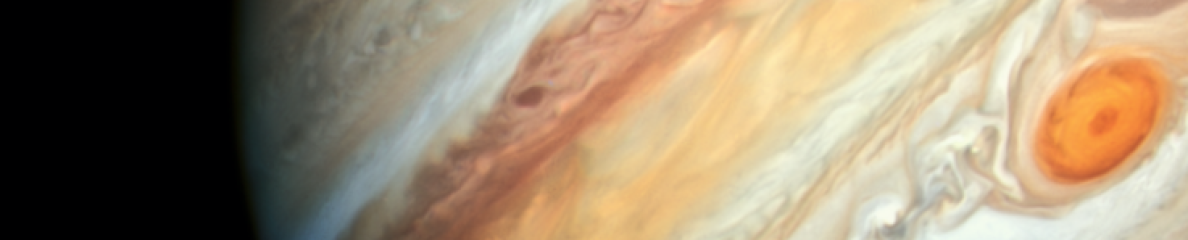
Tonight, the moon is less than halfway from Venus to bright Jupiter that is high in the southeast, 5.1° to Aldebaran’s upper left, Taurus’ brightest star.
Tomorrow night, Jupiter’s retrograde ends and the planet resumes direct or its eastward motion compared to the starry background.
Mars at Eastern Edge of Planet Parade

Farther eastward, reddish Mars, the planet parade’s eastern participant, is less than halfway up in the east. It retrogrades in front of Gemini near Castor and Pollux, the Twins.
Trace tonight’s section of the solar system from Mars to Saturn through Jupiter and Venus.
Saturn is becoming more difficult to see each evening. Tonight, it sets less than three hours after sundown, losing four minutes of setting time each night. On the 12th its sets two hours after nightfall and an hour earlier on the 25th.
Look for this planet parade each night after sundown.
LATEST ARTICLES
- 2026, July 4: Mars–Uranus Conjunction, Moon and Saturn, Venus Near Regulus
 July 4, 2026: Mars passes Uranus in a close conjunction before sunrise while Saturn shines in Pisces. After sunset, Venus approaches Regulus in Leo as their conjunction nears.
 - 2026, July 3: Mars Nears Uranus While Venus Closes on Regulus
 July 3, 2026: Mars approaches Uranus before sunrise while Venus closes on Regulus after sunset. Find Saturn, the Pleiades star cluster, Aldebaran, Jupiter, and the bright gibbous moon.
 - 2026, July 2: Four Bright Planets and the Waning Gibbous Moon
 July 2, 2026: See four bright planets and a waning gibbous moon during the nighttime hours. Find Saturn, Mars, Venus, Jupiter, Uranus, the Pleiades star cluster, and Aldebaran.
 - 2026, July 1: July’s Outlook for the Sun, Moon, and Planets
 July 1, 2026: This is the outlook for the visibility of the moon and planets for July 2026. The moon passes bright stars while the summer noon sun is lower in the sky.
 - 2026, June 30: Full Strawberry Moon Lights the Sky While Venus Approaches Regulus
 June 30, 2026: The Full Strawberry Moon remains a bright nighttime sight while Mars moves away from the Pleiades, Saturn climbs higher in the eastern morning sky, and Venus approaches Regulus before their upcoming conjunction.