April 3, 2026: Mercury’s spring elongation is difficult to observe in morning twilight. The moon passes Spica, while Venus and Jupiter shine after sunset.

by Jeffrey L. Hunt
Chicago, Illinois: Sunrise, 6:30 a.m. CDT; Sunset, 7:19 p.m. CDT. Times are calculated by the US Naval Observatory’s MICA computer program. Check local sources for sunrise and sunset times.
Venus as an Evening Star
Mercury at Greatest Elongation

Mercury is at greatest elongation today, appearing farthest from the sun in the sky as it shuttles through its solar orbit.
The planet rises in the eastern sky about an hour before sunrise, but it is only 5° above the east-southeast horizon during bright twilight at 30 minutes before daybreak. This is a poor appearance for Mercury sightings, even though the speedy planet is near aphelion – the farthest distance from the sun. For clarity – elongation is the angle between the sun and planet with Earth at the vertex, while aphelion is the actual distance from the sun.
Morning Moon

Farther westward before sunrise, the bright moon is in the southwest. An hour before sunrise, the lunar orb, 98% illuminated, is less than 15° above the southwest horizon. It is 5.4° to Spica’s lower left, Virgo’s brightest star.
Mars, Saturn, and Neptune are not visible. They rise before sunup, but are hidden by bright morning twilight.
Evening Star

After sunset, Venus shines brightly from the western sky. It is easy to locate through evening twilight’s colorful hues. At 45 minutes after sunset, the Evening Star is over 10° above the western horizon. The planet sets nearly 110 minutes after sundown.
Venus steps eastward in front of Aries, over 10° to the lower left of Hamal, the Ram’s brightest star. Their wide conjunction occurs in two nights.
Jupiter

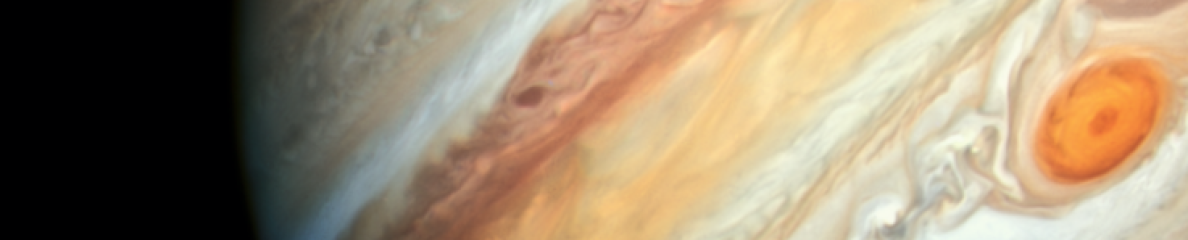
Cutting the gap to Jupiter by about 1° per night before their June 9 conjunction, the Jovian Giant is 70° to Venus’ upper left. The solar system’s largest planet is that bright star high in the southwest. It slowly rambles eastward in front of Gemini near the Twins, Castor and Pollux. Through a binocular, watch it overtake and pass Wasat.
Uranus is in the western sky, but the thicker air toward the horizon makes the view a challenge. For practical observing, its season is finished. It can still be found through telescopes with the lowest magnification eyepieces.
Moon, Spica

Later tonight, the moon rises about two hours after sunset. An hour later, it is less than 10° above the southeast horizon and nearly 15° to Spica’s lower left. During the night, the moon moves farther westward. Before sunrise, it is in the southwest below Zubenelgenubi, part of Libra.
Mercury’s appearance at this spring morning greatest elongation is unimpressive. Look for it when observing circumstances improve. Venus, Jupiter, and the moon are visible tonight.
LATEST ARTICLES
- 2026, May 23-29: Venus Overtakes Jupiter During May Evening Sky Display
 May 23-29, 2026: Watch Venus rapidly close the gap to Jupiter with Gemini during late May evenings. Follow the bright planets past Pollux, Alhena, Mebsuta, and other notable Gemini stars.
 - 2026, May 22-24: Waxing Moon Passes Leo While Venus and Jupiter Shine After Sunset
 May 22-24, 2026: Watch the waxing moon move through Leo after sunset while brilliant Venus and Jupiter shine in the western sky. Learn how to find Regulus, Denebola, and the Sickle of Leo.
 - 2026, May 21: Crescent Moon Near the Beehive Cluster with Venus and Jupiter After Sunset
 May 21, 2026: See the crescent moon near the Beehive Cluster after sunset while brilliant Venus and Jupiter shine in the western sky. Saturn appears before sunrise in the east.
 - 2026, May 20: Waxing Crescent Moon Near Jupiter as Venus Brightens the Evening Sky
 May 20, 2026: See the waxing crescent moon near Jupiter after sunset while brilliant Venus shines in the west-northwest. Saturn climbs higher before sunrise as Mercury moves into the evening sky.
 - 2026, May 19: Crescent Moon Between Venus and Jupiter After Sunset
 May 19, 2026: See the crescent moon between brilliant Venus and Jupiter after sunset while Saturn climbs higher in the eastern sky before sunrise. Learn where and when to look.