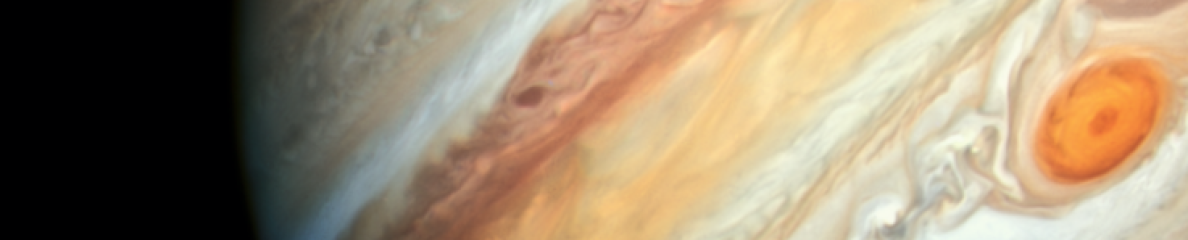
November 23, 2024: Four bright planets and the moon are visible during the nighttime hours. Brilliant Venus begins the nightly planet display that ends with Mars.

PODCAST FOR THIS ARTICLE
by Jeffrey L. Hunt
Chicago, Illinois: Sunrise, 6:50 a.m. CDT; Sunset, 4:24 p.m. CST. Check local sources for sunrise and sunset times. Times are calculated by the US Naval Observatory’s MICA computer program.
Morning Sky
Morning Moon with Leo

An hour before sunrise, the thick waning crescent moon, 46% illuminated, is high in the south-southeast, 6.7° to Regulus’ lower left, Leo’s brightest star.
The moon’s place this morning nearly mirrors the sun’s spot during late summer mornings.
Jupiter in West

Bright Jupiter is over 25° above the western horizon, below Taurus’ horns and above Aldebaran, the Bull’s brightest star. As the planet heads for opposition, it is lower in the sky each morning.
Mars between Jupiter, Moon

Mars is more than halfway from Jupiter to the morning moon. It is to the upper left of Castor and Pollux.
See Mars, Beehive Star Cluster

Use a binocular to see it with the Beehive star cluster, a stellar bundle that appears about three times larger than a Full moon, but appears as a cloud to the unassisted eye in a dark location. Place Mars toward the upper right edge in the field; the cluster appears near the center. It is in the middle of an irregular box, bounded by Asellus Australis, Asellus Borealis, Eta Cancri (η Cnc on the chart) and Theta Cancri (θ Cnc). This morning, Mars is 1.0° to Eta’s upper right and 2.9° to the right of the cluster.
More stars are visible in the cluster when observed before twilight begins and when the moon is out of the sky.
Evening Sky
Night with Planets Begins after Sunset

A night with the planets begins after sunset. Brilliant Venus is visible in the southwest even during bright twilight. As darkness falls, the Evening Star is easy to see.
By one hour after nightfall, Venus is nearly 15° above the southeast horizon. It is 2.0° to the upper left of Nunki, in the handle of the Teapot, the brightest stars in Sagittarius. Use a binocular to see the star with the planet.
Mercury retreats into brighter twilight. While the planet sets over an hour after sundown, it is dimmer than it was a week ago, and less than 5° above the horizon at 30 minutes after sundown. The speedy world is overtaking Earth, reappearing before sunrise later next month.
Saturn, Neptune

When Venus is in the southwest, look for Saturn less than halfway up in the south-southeast. While not dazzling like Venus, the Ringed Wonder is the brightest star in the region. It is about 20° to the upper left of Fomalhaut, the mouth of the Southern Fish.

With the waning moon visible later during the night, try to find Neptune with a binocular. It is over 14° to Saturn’s upper left, in front of a dim Aquarius’ starfield. Through a binocular, Neptune appears as a bluish star near the stars 20 Piscium (20 Psc on the chart) and 24 Piscium (24 Psc).
Jupiter

Jupiter rises less than an hour after sunset. When they are near the horizon, Jupiter and Venus are bright enough to shine through the atmosphere’s filtering effects. Within 30 minutes of Jupiter’s rising, look for the night sky’s two brightest starlike bodies in opposite directions, Venus in the southwest and Jupiter in the east-northeast. Find a clear horizon looking in their directions. Watch Jupiter seem to rise higher and Venus set.
By three hours after nightfall, Jupiter is over 20° above the eastern horizon. It is between Taurus’ horns, Elnath and Zeta Tauri. The Jovian Giant retrogrades – appears to move westward against the starry background. Tonight, it is 9.3° to topaz Aldebaran’s lower left, the Bull’s brightest star.
Uranus through Binocular

Planet Uranus is in the same binocular field with the Pleiades star cluster. It is easy to see to the west of the stars 13 Tauri (13 Tau on the chart) and 14 Tauri. Look for it when it is higher in the sky and before the moon rises, over six hours before sunrise tomorrow.
Mars at End of Night with Planets

Mars, about the same color as Aldebaran, but dimmer, rises about three hours after Jupiter. Before midnight and six hours after sunset, the Red Planet is nearly 20° up in the east-northeast, over 12° below Pollux, one of the Gemini Twins.
As the sky appears to move westward, Saturn sets in the west-southwestern sky. Jupiter and Mars appear farther westward. During twilight tomorrow morning they are nearly in the same place in the sky as this morning.
RECENT PODCASTS
LATEST ARTICLES
- 2026, May 20: Waxing Crescent Moon Near Jupiter as Venus Brightens the Evening Sky
 May 20, 2026: See the waxing crescent moon near Jupiter after sunset while brilliant Venus shines in the west-northwest. Saturn climbs higher before sunrise as Mercury moves into the evening sky.
 - 2026, May 19: Crescent Moon Between Venus and Jupiter After Sunset
 May 19, 2026: See the crescent moon between brilliant Venus and Jupiter after sunset while Saturn climbs higher in the eastern sky before sunrise. Learn where and when to look.
 - 2026, May 18: Closest Venus–Moon Conjunction of the Evening Apparition Lights the Western Sky
 May 18, 2026: See the closest Venus–Moon conjunction of this evening apparition as brilliant Venus shines beside the crescent moon after sunset. Learn when and where to look.
 - 2026, May 17-20: Waxing Crescent Moon Passes Venus and Jupiter in May Evening Sky
 May 17-20, 2026: Watch the waxing crescent moon pass brilliant Venus and Jupiter after sunset. The May 18 Venus–Moon pairing is one of the prettiest sights of the planet’s 2026 evening apparition.
 - 2026, May 16: Three Bright Planets are in the Nighttime Sky as Venus Closes in on Jupiter
 May 16, 2026: Saturn emerges from morning twilight while brilliant Venus advances toward Jupiter after sunset. Learn where to find the bright planets.