February 17, 2026: A New moon marks Lunar New Year and the start of Ramadan as Mercury nears greatest elongation. Find Jupiter, Saturn, Mercury, and Uranus in the February evening sky.

by Jeffrey L. Hunt
Chicago, Illinois: Sunrise, 6:43 a.m. CST; Sunset, 5:26 p.m. CST. Times are calculated by the US Naval Observatory’s MICA computer program. Check local sources for sunrise and sunset times.
As Mercury approaches greatest elongation, the Moon passes through its New moon phase, beginning lunation 1276 — the count of lunar cycles used by almanacs for over a century.
Lunar New Year

The Lunar New Year begins at the New moon that occurs between January 21 and February 20, following the winter solstice, typically the beginning of the second lunation. This New moon occurs today at 6:01 a.m. Central Time.
The New Year, designated as the Year of the Horse, is known as the Spring Festival in China, Tết in Vietnam, Seollal in South Korea, and Losar in Tibet, among other regional traditions across East and Southeast Asia.
This New moon also marks the beginning of Ramadan, the ninth month of the Islamic calendar.
The Islamic calendar consists of 12 lunar months totaling 354 days. It is not adjusted to remain aligned with the seasons, so Islamic months move earlier through the civil calendar over time. Depending on local custom and religious authority, Ramadan begins either on the date of the astronomical New moon or when a thin waxing crescent moon is first observed in the western sky after sunset.
The Lunar New Year and the beginning of Ramadan occur on the same date during 2027 and 2028. In 2029, Ramadan begins earlier in January, near January 14, as the Islamic calendar advances relative to the solar year.
Solar Eclipse

At this New moon phase, an annular (ring) solar eclipse occurs over Antarctica, while a partial eclipse occurs over the southern oceans, and southernmost Africa and South America.
Mercury and Saturn

In the evening sky, three bright planets are visible. Beginning about 45 minutes after nightfall, Mercury and Saturn are low in the west-southwest. The Elusive Planet shines as a bright star through the colors of evening twilight, nearly 10° above the horizon. It reaches greatest elongation in three evenings, when we see it farthest from the Sun.
Saturn, noticeably dimmer than Mercury, is nearly 15° to the speedy planet’s upper left. The Ringed Woner is sliding into brighter twilight as it approaches solar conjunction late next month. Although its rings remain visible through a telescope, Saturn’s low altitude — its height above the horizon — reduces clarity as thicker air blurs and dims the view.
Neptune lies in the same region of the sky as Saturn, but its faint light is lost in the bright twilight and low altitude.
Jupiter and Gemini

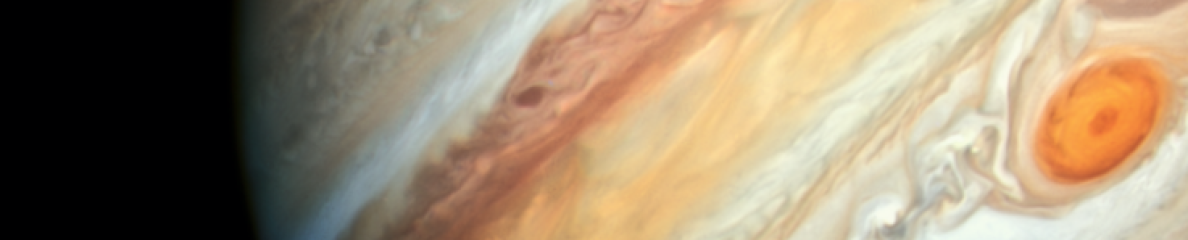
Farther eastward, bright Jupiter dominates the night sky until Venus returns to the western evening sky. Step outside about an hour after sunset and look high in the east-southeast. That bright “star” is Jupiter. The Jovian Giant retrogrades in front of Gemini, near Castor and Pollux. Use a binocular to watch the planet shift westward from night to night compared to the dimmer star Wasat.
Uranus

At the end of evening twilight, after Mercury sets and Saturn stands about 10° above the west-southwest horizon, The Tilted World is high in the southwest in the same binocular field with the Pleiades star cluster. The stellar bundle resembles a miniature dipper to Orion’s upper right. Through a binocular, place the star cluster near the top of the field of view. Appearing as an aquamarine star, Uranus is near the bottom of the field, close to stars 13 and 14 Tauri.
Jupiter remains in the sky most of the night, appearing high in the south before midnight. It sets in the west-northwest before morning twilight begins.
Look for Jupiter, Mercury, and Saturn after nightfall. Find Uranus with a binocular after evening twilight ends.
No Planet Parade at Month’s End
Late in February, the so-called planet parade consists of planets scattered across the sky rather than aligned or grouped in any meaningful way, even though several are visible during the same evening hours. Jupiter and the moon are the clear standouts, shining high and bright after sunset, while other planets require careful timing and unobstructed horizons. Claims of a rare string of planets across the sky exaggerate what observers can actually see. The February 8 Sky Almanac lays out the geometry, visibility limits, and practical expectations for skywatchers at month’s end.
LATEST ARTICLES
- 2026, July 2: Four Bright Planets and the Waning Gibbous Moon
 July 2, 2026: See four bright planets and a waning gibbous moon during the nighttime hours. Find Saturn, Mars, Venus, Jupiter, Uranus, the Pleiades star cluster, and Aldebaran.
 - 2026, July 1: July’s Outlook for the Sun, Moon, and Planets
 July 1, 2026: This is the outlook for the visibility of the moon and planets for July 2026. The moon passes bright stars while the summer noon sun is lower in the sky.
 - 2026, June 30: Full Strawberry Moon Lights the Sky While Venus Approaches Regulus
 June 30, 2026: The Full Strawberry Moon remains a bright nighttime sight while Mars moves away from the Pleiades, Saturn climbs higher in the eastern morning sky, and Venus approaches Regulus before their upcoming conjunction.
 - 2026, June 29: Full Strawberry Moon Lights the Sky as Mars Passes Pleiades
 June 29, 2026: The Full Strawberry Moon shines all night while Mars passes Alcyone, the Pleiades’ brightest star, before sunrise. Find Saturn, Uranus, Venus, and Jupiter during this busy skywatching period.
 - 2026, June 28: Mars Passes the Pleiades While the Strawberry Moon Nears Full Phase
 June 28, 2026: Mars approaches the Pleiades before sunrise while the Strawberry Moon nears Full Moon phase after sunset. Saturn, Venus, Jupiter, and Uranus add to a sky filled with planetary sights.