September 22, 2024: Today, the autumnal equinox occurs signaling the begin of autumn in the northern hemisphere. Across North America, the moon occults or eclipses stars in the Pleiades star cluster.

by Jeffrey L. Hunt
Chicago, Illinois: Sunrise, 6:39 a.m. CDT; Sunset, 6:47 p.m. CDT. Check local sources for sunrise and sunset times. Times are calculated by the US Naval Observatory’s MICA computer program.
Autumnal Equinox

Today, astronomical autumn begins in the northern hemisphere, when the sun is above the equator at 7:44 a.m. Central Time. After today and until March 20, 2025, the sun’s intensity is directed toward the southern hemisphere. The seasons are reversed so that today marks astronomical spring at more southerly latitudes.
The precise declaration of the new season occurs when the sun appears at particular celestial coordinates that mirror terrestrial longitude and latitude. In the sky, latitude is known as declination and longitude is named right ascension, measured in hours and minutes, like time.
Celestial Sphere

A celestial equator divides the northern hemisphere from the southern hemisphere and it is above Earth’s imaginary equator. For a reference, Orion’s belt stars roughly line along that astronomical circle.
The solar system’s plane is tilted 23.5° compared to the celestial equator. The ecliptic crosses the equator at two points known as the equinoxes. The points farthest from the equator are known as solstices.
When the sun is at an equinox point it rises at the east cardinal direction and sets at the west direction point. At the winter solstice point it rises toward the southeast and sets toward the southwest. At the summer solstice point, it rises toward the northeast and sets toward the northwest.
The sun appears to move along the ecliptic from Earth’s rotation. This morning when the sun has coordinates 12 hours right ascension and 0° declination, this is the moment of the equinox.

Because of the definitions of sunrise and sunset, daylight is still eight minutes longer than nighttime. They are not equal until the 25th.
The season’s length is 89 days, 20 hours, and 35 minutes. Mid-autumn occurs on November 6, 5:02 a.m.
For today, Happy Equinox! Enjoy the changing colors and shorter days. For our southern hemisphere readers, have a marvelous spring and start planning those summer beach trips for Christmas and New Year’s!
Here is the planet forecast:
Morning Sky
Moon Occults Pleiades

Step outside an hour before sunrise. The southern sky is decorated with the moon, Jupiter, Mars, and several bright stars. The gibbous moon, 75% illuminated, is high in the southwest, with the Pleiades star cluster, washed out by the bright moonlight. Use a binocular, spotting scope, or low magnifying power in a telescope to watch the moon eclipse stars in the cluster.
Beginning at 4:57 a.m. Central Time, the moon begins to occult or eclipse Electra, one of the Pleiades, in the Chicago area. The occultation is visible across a large portion of North America and Central America. The star reappears at 5:55 a.m. in Chicago, near mid-twilight.
The moon’s eastward trek is obvious when it occults Merope at 5:22 a.m. during early twilight.
For eastern North America the stars disappear into brighter twilight, but in the western regions and in Hawaii, the moon occults Alcyone, the brightest Pleiad.
Uranus is near the moon and the Pleiades this morning, but the moonlight overwhelms its visibility. Return when the moon is a waning crescent or not in the sky.
Bright Stars During Pre-Dawn Hours

This region of the sky has bright stars that are in the south during winter. The season’s flagship constellation Orion, with Betelgeuse and Rigel, is easy to locate. The pattern is in the southern sky during early autumn before sunrise.
Aldebaran, Taurus brightest star, is between Orion and the moon this morning. Elnath, one of the Bull’s horns, is above Orion and 6.4° to Jupiter’s upper left.
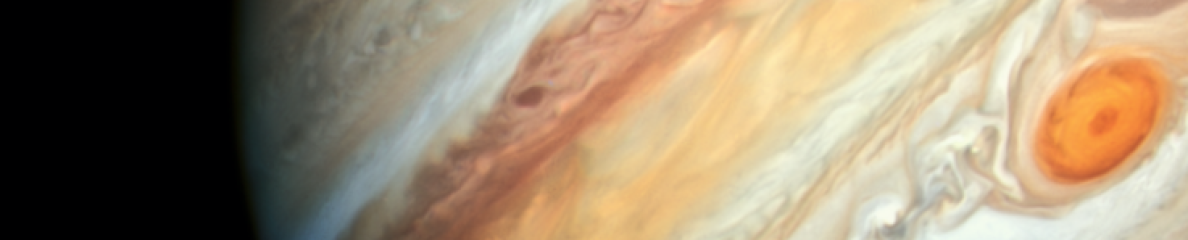
The Jovian Giant is the brightest star in the sky this morning, easily outshining Sirius. The planet plods eastward in front of Taurus, although it is slowing to begin the illusion of retrograde next month.
Mars, similar to Aldebaran’s brightness and color, is nearly 20° to Jupiter’s lower left. The Red Planet marches eastward in front of Gemini, over 14° from Castor and Pollux, the Twins, over halfway up in the east-southeast.
Mercury retreats into bright morning twilight, reaching its superior conjunction in over a week, followed by an appearance in the evening sky during November.
Evening Sky
Venus and Saturn

Venus shines from the west-southwest after sundown. Thirty minutes after sunset, it is over 6° above the horizon. It is bright enough to see through evening twilight’s bright hues.

Look for Saturn in the east-southeast as the sky darkens; then find Venus again before it sets. They became visible simultaneously in nearly opposite directions over a month ago, but Venus’ visibility suffers from our poor view of the solar system in the western sky after sundown.
At an hour after nightfall, the Ringed Wonder is over 15° above the east-southeast horizon. During the night it appears farther westward as Earth rotates.
Late Night

Around midnight, Jupiter and the moon are in the east-northeast. The gibbous moon, 67% illuminated, is over 20° above the horizon and 10° to Jupiter’s upper right.
RECENT PODCASTS
LATEST ARTICLES
- 2026, May 30: Blue Moon Appears with Scorpius While Venus, Jupiter, and Mercury Line Up
 May 30, 2026: A seasonal Blue Moon shines near Antares in Scorpius while Venus, Jupiter, and Mercury form a bright evening lineup in the western sky after sunset.
 - 2026, May 28-31: Blue Moon Passes Libra and Scorpius Near Antares
 May 28-31, 2026: The seasonal Blue Moon passes Libra and Scorpius during late May, appearing near Antares while bright moonlight spreads across the evening sky.
 - 2026, May 25-27: Waxing Gibbous Moon Passes Spica While Venus Closes Gap to Jupiter
 May 25-27, 2026: Watch the waxing gibbous moon pass Spica in Virgo while Venus steadily overtakes Jupiter in the western evening sky before their June 9 conjunction.
 - 2026, May 23-29: Venus Overtakes Jupiter During May Evening Sky Display
 May 23-29, 2026: Watch Venus rapidly close the gap to Jupiter with Gemini during late May evenings. Follow the bright planets past Pollux, Alhena, Mebsuta, and other notable Gemini stars.
 - 2026, May 22-24: Waxing Moon Passes Leo While Venus and Jupiter Shine After Sunset
 May 22-24, 2026: Watch the waxing moon move through Leo after sunset while brilliant Venus and Jupiter shine in the western sky. Learn how to find Regulus, Denebola, and the Sickle of Leo.